Bhuj to Dholavira Road Trip: The Complete Step-by-Step Guide
Dholavira is about 250 km from Bhuj, a 5 to 6 hour drive across the Rann. Both routes, the Road to Heaven, ASI ticket and timings, the permit truth, where to stay, and a step-by-step plan.
Advertisement
Dholavira is about 250 km from Bhuj, a 5 to 6 hour drive across the Rann of Kutch to a 4,500-year-old Harappan city that became a UNESCO World Heritage Site in 2021. You do not need a permit for Dholavira itself, the best months are October to March, and you should carry cash and full fuel, because the middle of the route is genuinely empty. This is the whole trip, start to finish.
This guide is built from Gujarat Tourism, the Archaeological Survey of India and UNESCO, cross-checked with traveller route reports. We have not driven it ourselves, so distances are mapping estimates and the few figures that sources disagree on are flagged rather than guessed. Confirm the live ticket price and road conditions before you go.
How far is Dholavira from Bhuj?
Dholavira is roughly 220 to 250 km from Bhuj depending on the route, about 5 to 6 hours of driving. Gujarat Tourism lists 250 km by the classic Bhachau and Rapar road; the newer route through Khavda is a little shorter. Both are mapping estimates that shift with roadworks and where you stop.
| Leg | Distance | Notes |
|---|---|---|
| Bhuj to Dholavira (via Bhachau, Rapar) | ~250 km | The classic paved route, all-year |
| Bhuj to Dholavira (via Khavda, Road to Heaven) | ~220 to 235 km | Shorter and more scenic, crosses the salt flats |
| Driving time | ~5 to 6 hours | Start early to arrive before dark |
| State bus (Bhuj depot) | Dep 2:00 PM, arr 8:30 PM | Per Gujarat Tourism, one option without a car |
There is a state bus, but a road trip is far better here, because the drive itself, especially the salt-flat causeway, is half the reason to come.
The two routes from Bhuj to Dholavira
There are two genuinely different ways to drive from Bhuj to Dholavira, and which you pick changes the whole day. The eastern route is faster and safer for a first-timer, while the northern route is the spectacular one that crosses the salt flats of the Rann. Here is how they compare.
- Eastern route, via Bhachau and Rapar. Bhuj to Bhachau to Rapar, then across to Khadir Bet island and Dholavira. Fully paved, Rapar is the last real town, and the Rapar to Dholavira leg is about 90 km. This is the reliable all-weather choice.
- Northern route, via Khavda and the Road to Heaven. Bhuj to Bhirandiyara to Khavda, then the causeway across the white salt desert to Khadir Bet. Shorter and far more scenic, but remote, so it suits a confident driver with fuel in hand.
Our pick: take the northern Khavda route in and the eastern Rapar route back, so you see the salt flats and still have a solid paved road for the return.
The Road to Heaven: driving across the Rann
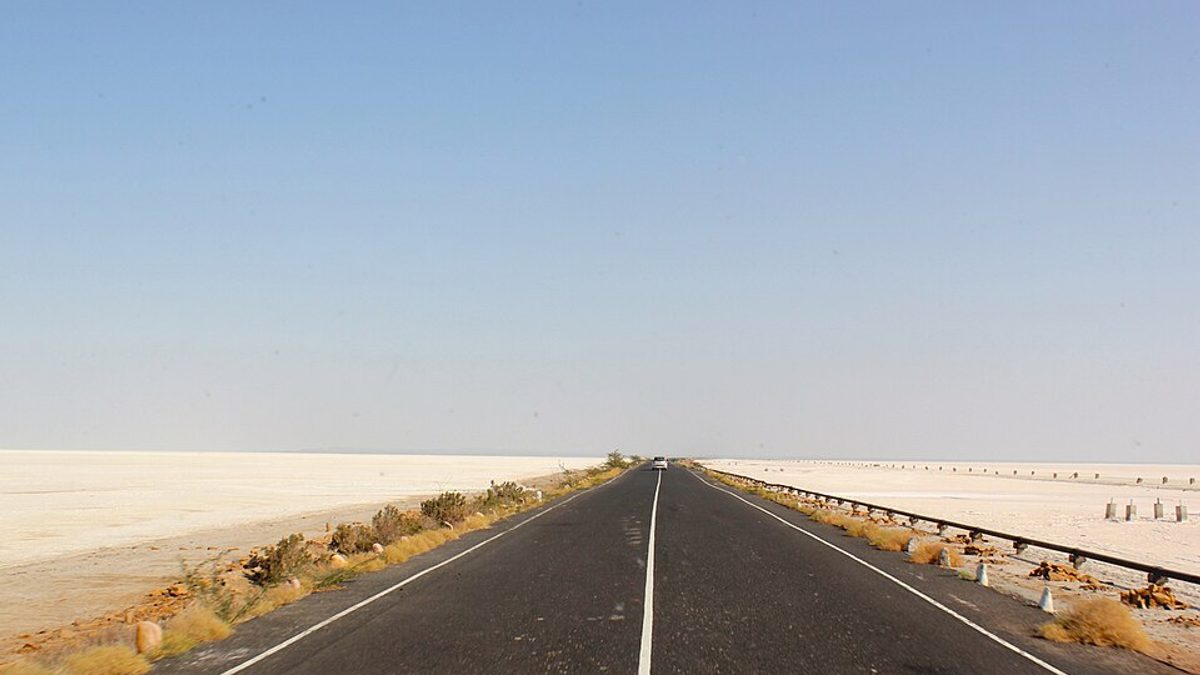
The Road to Heaven is a roughly 30 km causeway that runs dead straight across the white salt flats of the Great Rann, from near Khavda to Khadir Bet, with salt and shallow water on both sides so the road seems to vanish into the sky. Dholavira sits about 10 km beyond the causeway's end.
It is the highlight of the northern approach and one of the most photographed drives in India. A few honest notes: there is no shade, no fuel and no food on the causeway, the glare off the salt is intense at midday, and the surrounding flats can hold water after rain. Cross it in the morning or late afternoon for the best light and the safest driving.
Step-by-step Bhuj to Dholavira road trip plan
Here is the Bhuj to Dholavira road trip as a running order, built to get you to the site with daylight to spare and back safely. Treat it as a full-day drive, or better, an overnight so you are not rushing the ruins and the drive home.
Advertisement
- Start from Bhuj early, ideally by 7 to 8 AM. Fill the tank completely in Bhuj, draw cash, and load water and snacks, because services thin out fast once you leave the city.
- Choose your road. For the scenic run, head north toward Bhirandiyara and Khavda. For the steady paved run, head east toward Bhachau and Rapar.
- Top up at the last town. On the eastern route that is Rapar; on the northern route, Khavda is your last reliable stop. Use the toilet, check fuel, top up water.
- Drive the approach. Northern route: cross the Road to Heaven causeway onto Khadir Bet. Eastern route: cross onto the island past Rapar. Both land you near Dholavira village.
- Reach Dholavira and see the site while the light is good. Give the ruins and museum at least two to three hours.
- Add the Fossil Park nearby if you have time, then either check into your stay or begin the return before dark.
The single most important rule on this drive: do not be caught on the remote stretches after dark. The desert roads are unlit, livestock wanders onto them, and there is no help if you break down.
What to see at Dholavira
Dholavira is one of the largest cities of the Harappan, or Indus Valley, civilisation, occupied from about 2650 BCE to 1450 BCE. Unlike the brick cities of Harappa and Mohenjo-daro, Dholavira was built in stone, and UNESCO inscribed it as a World Heritage Site on 27 July 2021 as "Dholavira: A Harappan City", India's 40th.
The things worth your time on the ground:
- The three-part city: a heavily fortified citadel or castle, a middle town and a lower town, laid out with double stone walls. The planning is the point here, not height.
- The water system: sixteen or more reservoirs and cascading tanks, plus a huge rock-cut stepwell about 73 metres long, among the earliest and most advanced water-harvesting works anywhere.
- The world's oldest signboard: a row of ten large Indus-script signs, each around 37 cm high, one of the longest inscriptions the civilisation left.
- The ASI site museum: seals, beads and a graduated scale, a good half-hour before or after the ruins.
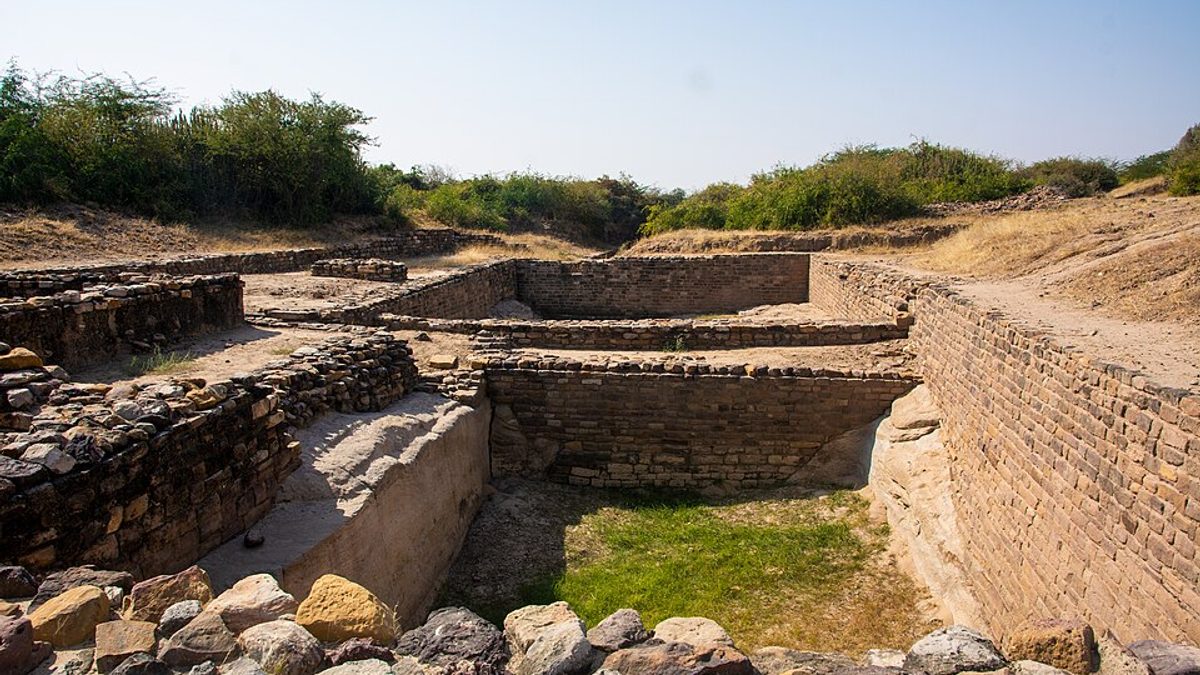
Take a guide or the ASI signage seriously. Without context the site reads as low stone walls; with it, you are looking at 4,500-year-old urban planning.
Dholavira entry ticket, timings and permit
Dholavira is open daily, usually 9:00 AM to 5:00 PM, and entry is inexpensive. The commonly quoted ASI ticket is about 40 rupees for Indian visitors and 600 for foreign nationals, the standard World Heritage Site rate, but sources differ, so confirm the current price at the counter or book through the ASI portal.
| Item | Detail |
|---|---|
| Entry ticket (Indians) | Approx ₹40, confirm at counter |
| Entry ticket (foreign nationals) | Approx ₹600, confirm at counter |
| Timings | About 9:00 AM to 5:00 PM, most days |
| Online booking | ASI portal, asi.payumoney.com |
| Permit for Dholavira | Not required |
The permit question, cleared up: you do not need any permit to visit Dholavira or Khadir Bet. A permit is only needed for the separate White Rann salt flats at Dhordo, near Bhuj, which is a border security zone, booked online for about 100 rupees a person. Do not confuse the two. Dholavira sits around 50 km from the international border, so rules can change; if in doubt, ask locally. If you like sites with a formal entry process, our guide to getting permission to visit ISRO Sriharikota covers one that genuinely needs registration.
Advertisement
Best time to visit Dholavira
Visit between October and March. The Rann of Kutch is pleasant in winter and brutally hot the rest of the year, with summer temperatures that make midday sightseeing genuinely unsafe. Winter also lines up with the Rann Utsav festival season, roughly November to early March.
One clarification that trips people up: the Rann Utsav Tent City is at Dhordo, on the Bhuj side, not at Dholavira. If you are combining the two, treat them as separate destinations on separate days. For Dholavira alone, any clear winter day works, and weekday mornings are quietest.
Where to stay and eat near Dholavira
Accommodation at Dholavira is limited, so book ahead. The main organised option is the Gujarat Tourism resort on Khadir Bet near the site, with basic cottages and meals from around 3,000 rupees, plus seasonal tent camps in winter and a few small private guesthouses in the village.
- Gujarat Tourism Dholavira resort: the closest proper stay, basic but right by the ruins, meals usually included.
- Seasonal tent cities: winter-only, package-based, priced from roughly 9,800 rupees a couple and much more on full-moon dates. Confirm the camp is at Dholavira and not Dhordo before booking.
- Private guesthouses: a handful near the village, worth a look for a simpler, cheaper night.
Food is tied mostly to where you stay. There is no restaurant strip, so expect simple Gujarati thali at the resort or village eateries. If you are day-tripping, carry lunch. Many travellers base in Bhuj and do Dholavira as a long day trip, which works but makes for a lot of driving.
Road trip essentials and safety
The drive is the part people underestimate on a Bhuj to Dholavira road trip. Kutch is remote, and the long stretch between towns has almost no fuel, food or signal, so a little preparation is the difference between a great day out and a stranded one. Pack for self-sufficiency.
- Fuel: fill up fully in Bhuj, and top up at Rapar or Khavda. Pumps exist at Dholavira but do not count on the middle of the route.
- Cash: carry enough. ATMs are effectively absent near Dholavira; the nearest reliable ones are in Bhuj and Rapar.
- Phone signal: patchy to none on the remote stretches. Download an offline map before you leave Bhuj.
- Water and snacks: pack more than you think, there is no shade on the salt flats.
- Timing: start early, and never drive the desert roads after dark.
For more Gujarat trips, see our guides to the Statue of Unity ticket prices and visiting Vantara in Jamnagar.
Sources
- Gujarat Tourism, Dholavira (route, distance, resort)
- UNESCO World Heritage Centre, Dholavira: A Harappan City (inscribed 2021)
- Archaeological Survey of India ticketing, asi.payumoney.com
- Incredible India, Dholavira in Kutch
- Gujarat government Rann permit portal, rannpermit.gujarat.gov.in (for the Dhordo White Rann, not Dholavira)
- Cover photograph of the road beside the Rann salt flats by Prof Ranga Sai, and the Dholavira ruins by Bhuppigraphy, both Wikimedia Commons, CC BY-SA 4.0
Distances are mapping estimates and prices are quoted from travel and tourism sources as of July 2026; the exact ASI ticket and any border-area rules change, so confirm on the official sites or at the site before you travel.
Topics
Frequently asked questions
Advertisement