Snow Predictions For Georgia 2026-2027

Atlanta averages 2.2 inches of snow a season and 8 of the last 16 winters brought none. NOAA normals, record storms and what the 2026-2027 outlook says.
Advertisement
Snow predictions for Georgia start with one number: the state averages 2.2 inches a season at Atlanta's Hartsfield-Jackson airport, and eight of the last sixteen winters delivered none at all. For 2026-2027 the NOAA Climate Prediction Center favours near-normal temperatures and above-normal precipitation, driven by a strengthening El Nino. Wetter does not mean snowier.
This is a research guide built from National Weather Service station records and official NOAA outlooks. We have not spent a winter in north Georgia ourselves, so every number here is sourced and dated rather than remembered.
Snow Predictions For Georgia 2026 2027
No official body forecasts how many inches Georgia will get. NOAA's Climate Prediction Center issues probability outlooks for temperature and precipitation only, and states plainly that its winter outlook "does not project seasonal snowfall accumulations as snow forecasts are generally not predictable more than a week in advance."
Here is what CPC did publish for December to February 2026-2027, in its seasonal discussion issued 16 July 2026:
- Temperature: "33 to 40% chances of near-normal temperatures" over the Southeast. Not colder. Not milder.
- Precipitation: above-normal, with "highest probabilities over parts of the Southeast in winter 2026-2027 when teleconnections are strongest."
- El Nino: a 97% chance it persists through early spring 2027, and an 81% chance it is very strong during October to December 2026.
That last point is where most winter articles go wrong. A strong El Nino pushes the subtropical jet south, which brings Georgia more storms and more moisture. The same pattern also produces fewer Arctic outbreaks, and Georgia snow needs cold air and moisture to arrive on the same day. El Nino reliably supplies one and works against the other.
The National Weather Service office in Peachtree City, which forecasts for north and central Georgia, puts it bluntly in its own El Nino briefing: "whether we're more likely to have an ice storm, snow storm, significant flooding or severe weather outbreak, it's all up for grabs."
Snowfall is expected in Georgia in 2026 2027
Where you stand in Georgia matters far more than which winter it is. The National Weather Service splits the state into three snow zones, and the gap between them is larger than the gap between a good winter and a bad one.
| Region | NWS seasonal average | Snow days a year |
|---|---|---|
| Northeast Georgia mountains | 4 to 6 inches | About 5 |
| North Georgia, excluding the mountains | 1 to 2 inches | One or two |
| Central Georgia | Less than 1 inch | Under one |
Individual weather stations let you get more specific. These are NOAA's official 1991-2020 climate normals, the same dataset the Weather Service uses, with each station's elevation:
| Location | Elevation | Dec | Jan | Feb | Mar | Season |
|---|---|---|---|---|---|---|
| Dahlonega | 1,460 ft | 0.7 | 1.4 | 0.8 | 0.4 | 3.3" |
| Blairsville | 1,949 ft | 1.2 | 0.5 | 0.4 | 1.0 | 3.1" |
| Jasper | 1,465 ft | 0.8 | 0.7 | 0.5 | 0.5 | 2.5" |
| Clayton | 1,965 ft | 0.8 | 0.9 | 0.6 | 0.1 | 2.4" |
| Atlanta (KATL) | 1,011 ft | 0.4 | 1.0 | 0.4 | 0.4 | 2.2" |
| Helen | 1,493 ft | 0.3 | 0.5 | 0.7 | 0.0 | 1.5" |
| Augusta | 134 ft | 0.1 | 0.4 | 0.3 | 0.0 | 0.8" |
| Columbus | 394 ft | 0.3 | 0.0 | 0.0 | 0.2 | 0.5" |
| Savannah | 29 ft | 0.0 | 0.0 | 0.0 | 0.0 | 0.0" |
Two things in that table are worth pausing on. Savannah's normal is a flat zero, so the coast is not a snow destination in any winter. And Dahlonega, the snowiest station in Georgia with a modern normal, beats Atlanta by barely an inch.
If you have read that Atlanta averages 1.5 inches, or 2.9, those figures come from other stations or from the older 1981-2010 normals period. The current NOAA normal for Hartsfield-Jackson is 2.2 inches, and the Weather Service prints the same number in its Atlanta climate product.
Will it snow in Atlanta in 2027?
Probably a little, and possibly nothing. Atlanta's normal is 2.2 inches a season, but eight of the last sixteen winters brought no measurable snow at all. That puts the honest base rate at roughly one in two. Nobody can narrow it further this far out, and no official forecaster tries.
The year in that question does more work than most people notice. An Atlanta winter straddles two calendar years, and the two halves are not equal. Here is the 2026-2027 season split against NOAA's 1991-2020 normals for Hartsfield-Jackson:
| Month | Atlanta normal | Share of the season |
|---|---|---|
| December 2026 | 0.4" | 18% |
| January 2027 | 1.0" | 45% |
| February 2027 | 0.4" | 18% |
| March 2027 | 0.4" | 18% |
| January to March 2027 | 1.8" | 82% |
Anyone asking about snow in Atlanta in 2027 is asking about 82% of a normal season. December 2026 carries the remaining 18%, and it is the month most likely to pass with nothing.
Averages are not promises. Atlanta's 4.7 inch season in 2017-18 was built almost entirely on the storm of 8 December 2017, so one well-timed system can invert that table in a day.
What can honestly be said about 2026-2027 is thin. NOAA's Climate Prediction Center gives the Southeast 33 to 40% odds on near-normal temperatures, favours above-normal precipitation, and puts the chance of El Nino persisting into early spring 2027 at 97%. It publishes no snowfall total, and says plainly that seasonal snowfall is "generally not predictable more than a week in advance". Any page quoting an inch figure for Atlanta in 2027 invented it.
Does it snow in Atlanta every year?
No. Half of recent winters produced nothing measurable. Across the 1991-2020 record Atlanta averages 1.4 snow days a year, counting days with at least a tenth of an inch, and in 2018-19 the airport did not log so much as a trace. Snow in Atlanta is an event, not a season.
The last three winters cover almost the whole range on their own:
- January 2026: 0.2 inches at the airport, while Clayton in the far northeast corner took up to 8 inches out of the same 31 January system.
- January 2025: 3.2 inches across the month, Atlanta's snowiest since 2014, with 24-hour records set at the airport on both 10 and 21 January.
- 2023-24: nothing at all, one of eight blank seasons since 2010.
Atlanta's biggest single day on record is 8.3 inches, on 23 January 1940. That is still smaller than any of the ten largest daily totals measured elsewhere in Georgia, every one of which came out of two storms, in 1942 and 1993.
And the storm Atlanta actually remembers is smaller than all of them. On 28 January 2014, "Snowjam" stranded thousands of drivers overnight, kept schoolchildren on buses past midnight and caused more than 1,500 accidents. The airport measured 2.6 inches, and the Weather Service recorded 1 to 3 inches across most of the metro. The damage came from timing, not depth: snow began at midday on a Tuesday onto pavement already in the teens, schools and offices released at the same hour, and once traffic stopped the plows could not reach the roads they were meant to treat. Two and a half inches is enough to close this city.
Advertisement
If the goal is to stand in snow rather than wait for it, that is a question of elevation instead of luck. Our guide to where to see snow near Atlanta covers the tubing parks and the drive north. The short version: Georgia has no ski resorts, and the nearest lift-served slopes sit over the North Carolina line.
When will it snow?
Snow falls in Georgia in four months and no others. Across every station we checked, NOAA's 1991-2020 normals are non-zero in December, January, February and March, and sit at exactly zero in all eight remaining months. January is the peak, carrying close to half of Atlanta's season total on its own.
| Month | Atlanta normal | Realistic chance |
|---|---|---|
| October, November | 0.0" | Nothing normal. Atlanta's earliest measurable snow on record was 27 November 2013 |
| December | 0.4" | Possible, usually light |
| January | 1.0" | The snowiest month, close to half the season total |
| February | 0.4" | Second best, and the month north Georgia often does best |
| March | 0.4" | Georgia's two biggest storms both hit in March |
| April onward | 0.0" | Over |
Atlanta records measurable snow, meaning at least a tenth of an inch, on an average of 1.4 days per year across the 1991-2020 record. In the northeast mountains the Weather Service counts about five snow days a year.
Do not read March's small number as March being safe. Both of the largest snowstorms in Georgia's history landed in the first half of March.
What every winter forecast says for 2026-2027
Most of the winter forecasts you can find quoted for Georgia right now have not actually been published, and one of them never will be. As of late July 2026, only NOAA has issued anything covering the 2026-2027 season. Here is the honest state of every major source:
| Forecaster | 2026-2027 status | What it says |
|---|---|---|
| NOAA Climate Prediction Center | Published 16 July 2026 | Near-normal temperatures favoured for the Southeast, above-normal precipitation. No snowfall total, by policy |
| Old Farmer's Almanac | Not yet published | Due in the 2027 edition. Its US winter forecast normally appears in August |
| Farmers' Almanac | Will never publish one | The publication has closed after 208 years. Its own notice: "The 2026 Farmers' Almanac will be our last edition" |
| AccuWeather | Not yet published | Last year's US winter forecast appeared in October |
| NWS Peachtree City | Does not issue seasonal outlooks | Relays the CPC outlook each November during Georgia Winter Weather Preparedness Week |
| University of Georgia Extension | No numbers, deliberately | Expects a strong El Nino, and warns the event "is not likely to look exactly like any of the previous years" |
Two warnings follow from that table, and both matter if you are reading other sites.
The Farmers' Almanac has shut down. Not paused, closed. Announced in November 2025 and confirmed by Popular Science and the Washington Post. Any page quoting a Farmers' Almanac forecast for winter 2026-2027 is quoting something that does not exist. Note this is a different publication from the Old Farmer's Almanac, which is still going.
Some of the "2026-2027" almanac text circulating online is last winter's forecast. The widely-copied line about below-normal temperatures with the coldest periods in mid to late December belongs to the Old Farmer's Almanac's 2026 edition, which covered winter 2025-2026. That winter has already happened, and as the next section shows, that call was wrong.
How accurate were last winter's forecasts?
Winter 2025-2026 in Georgia finished warmer and much drier than normal. The Weather Service's own seasonal summary gives Atlanta an average of 48.6°F against a 45.3°F normal, and 7.53 inches of precipitation against 12.77 normal. Every major Georgia station told the same story.
| What was predicted | By whom | What happened |
|---|---|---|
| Colder than normal, Appalachians south through the Southeast | Old Farmer's Almanac | Wrong. Atlanta finished 3.3°F above normal |
| Precipitation below normal | Old Farmer's Almanac | Right, and by a wide margin: 3 to 5 inches short at every station |
| Average temperatures, many wet periods | Farmers' Almanac | Wrong on both. Warmer than normal, and one of the drier winters in recent memory |
| Above-normal temperatures, below-normal precipitation | NOAA CPC, relayed by NWS | Both verified |
The almanacs advertise about 80% accuracy. Independent testing does not support it. A peer-reviewed check published in Weatherwise in 1981 scored 60 monthly forecasts across 32 US stations and found 50.7% of temperature calls and 51.9% of precipitation calls landed on the right side of normal, against 50% expected from a coin. A 2010 review by a Washington state climate scientist covering 1990 to 2002 found the correlation "essentially zero for temperature, and about -0.2 for precipitation." We looked at the almanac record in more depth in our piece on the two sides of the winter forecast.
CPC is not perfect either, and publishes its own failures: its skill scores average modestly above chance, and in winter 2020-2021 both its temperature and precipitation outlooks scored below zero. The difference is that CPC tells you the odds and shows its scorecard.
Does El Nino mean more snow in Georgia?
Not on Georgia's own record. We checked the four best-known Georgia snow and ice events against NOAA's official Oceanic Nino Index, the measure CPC uses to classify El Nino and La Nina winters. Not one of them happened in an El Nino winter.
| Event | Winter ONI | Actual state |
|---|---|---|
| March 1993 "Storm of the Century" | +0.09 | Neutral |
| January 2011 Atlanta snow and ice | −1.31 | Strong La Nina |
| January 2014 "Snowjam" | −0.28 | Neutral |
| January 2025 record snow days | −0.45 | Cool-neutral |
The January 2011 storm that closed metro Atlanta for the better part of a week arrived during one of the strongest La Ninas in fifty years, the exact pattern that is supposed to keep the Southeast warm and dry.
Our position: treat a strong El Nino as a reason to expect a wetter, stormier Georgia winter with more chances of something falling, and no reason at all to expect a snowy one. If you are booking a trip specifically to see snow, book on elevation, not on the ENSO forecast.
Top 10 highest snowfall records in Georgia
Every entry here is a single-day measurement from an official weather station, not an estimate or a regional guess. Two storms account for the entire list: the March 1942 snowstorm and the March 1993 Storm of the Century. Nothing since 1993 has come close.
Advertisement
| # | Snowfall | Location | Date |
|---|---|---|---|
| 1 | 19.3" | Cedartown, Polk County | 3 March 1942 |
| 2 | 18.0" | Resaca | 13 March 1993 |
| 3 | 16.5" | Calhoun | 13 March 1993 |
| 4 | 15.0" | Dallas | 13 March 1993 |
| 5 | 13.5" | Fairmount | 3 March 1942 |
| 6 | 13.0" | Cedartown | 13 March 1993 |
| 7 | 13.0" | Douglasville | 3 March 1942 |
| 8 | 12.5" | Chickamauga | 13 March 1993 |
| 9 | 12.2" | Dahlonega | 3 March 1942 |
| 10 | 12.0" | Ellijay | 3 March 1942 |
The 19.3 inches at Cedartown is Georgia's all-time 24-hour state record. Across two days in March 1993, Chickamauga totalled 21.0 inches and Blairsville 18.0.
What was the history of snowfall in Georgia
These are season totals at Atlanta's Hartsfield-Jackson airport, taken straight from the station record rather than from any published summary. A season runs 1 July to 30 June, so "2013-14" means the winter that fell in early 2014. Read down the column and the real pattern shows up fast.
| Season | Snowfall | Season | Snowfall |
|---|---|---|---|
| 2010-11 | 7.1" | 2018-19 | 0.0" |
| 2011-12 | 0.0" | 2019-20 | 0.0" |
| 2012-13 | 0.0" | 2020-21 | 0.0" |
| 2013-14 | 5.0" | 2021-22 | 0.5" |
| 2014-15 | 0.0" | 2022-23 | 0.1" |
| 2015-16 | 0.3" | 2023-24 | 0.0" |
| 2016-17 | 0.0" | 2024-25 | 3.2" |
| 2017-18 | 4.7" | 2025-26 | 0.2" |
Eight of those sixteen seasons produced no measurable snow in Atlanta at all. In 2018-19 the airport did not record so much as a trace.
This is the shape of Georgia snowfall that averages hide. It does not arrive a little every year. It arrives rarely, and when it does it can bring 7 inches in a season, then nothing for three years running. Any year-by-year table that climbs smoothly is not describing Georgia.
Last winter fits the pattern. Atlanta saw 0.2 inches, while the 31 January 2026 storm dropped up to 8 inches at Clayton in the far northeast corner, and Columbus and Macon both set 24-hour snowfall records on 18 January.
Best places to see snowfall in Georgia
Elevation decides this, and Georgia does not have much of it to work with. The state high point is Brasstown Bald at 4,784 feet, but the towns you can actually book a room in sit between 1,400 and 2,000 feet. That gap explains why the state's snow reputation outruns its snow totals.
- Dahlonega, 1,460 ft. The highest verified seasonal normal in Georgia at 3.3 inches. Took 12.2 inches in the March 1942 storm.
- Blairsville, 1,949 ft. 3.1 inches normal, and 18 inches over two days in March 1993. The base for Brasstown Bald and Vogel State Park.
- Clayton and the Rabun County high ground, 1,965 ft and up. Georgia's northeast corner reaches above 3,400 feet at Mountain City and Dillard. Clayton took 8 inches in the January 2026 storm while Atlanta got flurries.
- Jasper, 1,465 ft. Recorded roughly 13 inches in the December 2017 storm, the largest verified total near metro Atlanta that day.
- Brasstown Bald, 4,784 ft. The most reliable snow in the state, though there is no long-running weather station up there and therefore no official normal.
One correction to something several travel sites get wrong: Georgia has no ski resorts. Pages listing Cannon Mountain or Peek'n Peak as Georgia ski areas are describing New Hampshire and New York. The nearest lift-served skiing is over the state line in North Carolina, around Maggie Valley and Banner Elk.
Tips for planning a snow trip to Georgia
The honest advice comes first: do not book a Georgia trip for snow. Book north Georgia for the mountains in winter, for the empty trails and the cheap off-season cabins, and treat snow as a bonus that turns up on roughly five days a year at that elevation. Plan around these five points.
- Aim at January. It is Atlanta's snowiest month and close to half the season total. February is the better bet in the mountains.
- Book refundable, and book late. Nothing useful is knowable more than about a week out. Watch the NWS Peachtree City forecast rather than a seasonal outlook.
- Go north and go high. The difference between Clayton and Atlanta on any given storm is bigger than the difference between a good and bad winter.
- Take ice more seriously than snow. Georgia's worst winter events, January 2011 and the 2000 Super Bowl ice storm, were ice, not snow. Half an inch of ice takes power lines down.
- If snow starts while you are out, stop driving. Snowjam is the case study: 2.6 inches, and people spent 20 hours in their cars because everyone left at once.
For the same treatment of other states this season, see our guides to snow in Virginia, Maryland snowfall and the Tennessee record.
Sources
- NOAA Climate Prediction Center, seasonal outlook discussion (16 July 2026) and ENSO diagnostic discussion (9 July 2026)
- NOAA CPC, Oceanic Nino Index historical record
- NWS Peachtree City, Georgia climate summaries by region and El Nino impacts on north and central Georgia
- NWS Peachtree City storm reviews: 28 January 2014 and 8 December 2017
- NWS Peachtree City, winter 2025-26 climate summary and January 2025 climate summary
- NWS, the March 1993 Superstorm
- NOAA 1991-2020 Climate Normals, station snowfall, retrieved via the Regional Climate Centers data service
- Walsh, J. E. and Allen, D., "Testing the Farmer's Almanac", Weatherwise vol. 34 no. 5, 1981
- Bond, N., "On the Weather Forecasts made by the Old Farmer's Almanac", University of Washington Climate, 2010
- Farmers' Almanac closure notice, and reporting by Popular Science, November 2025
- University of Georgia Extension, Climate and Agriculture in the Southeast, March 2026
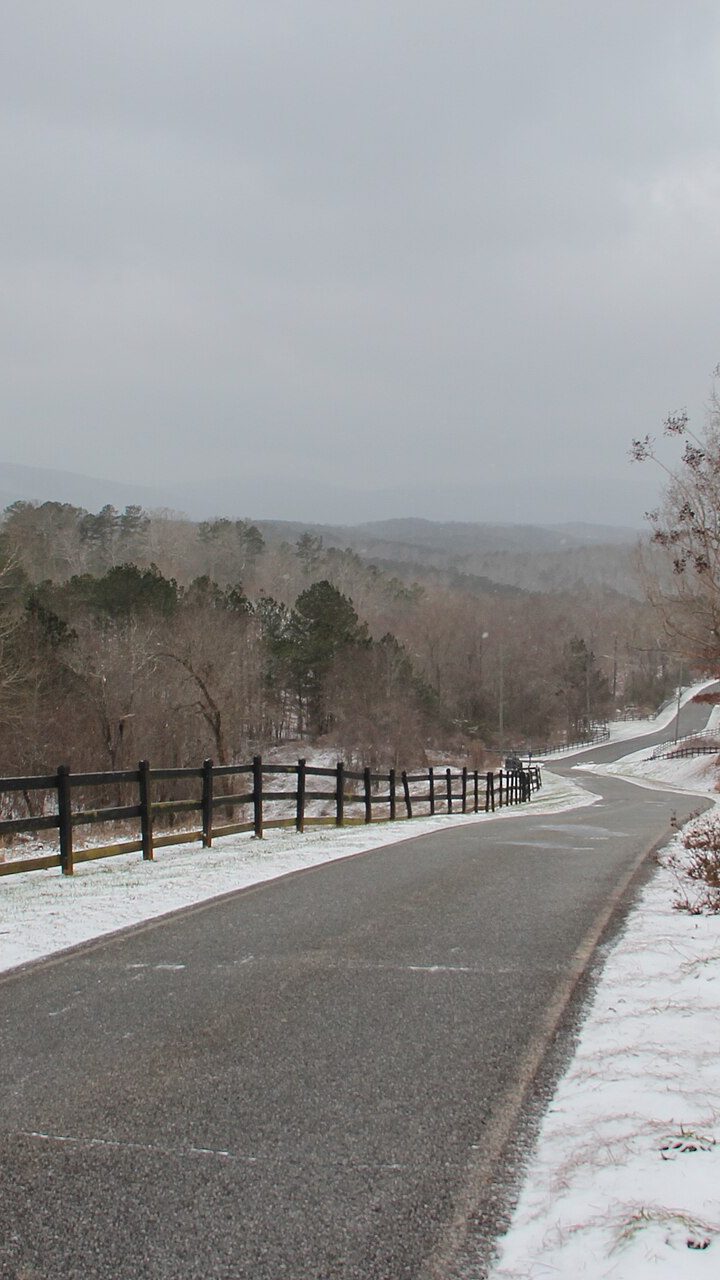
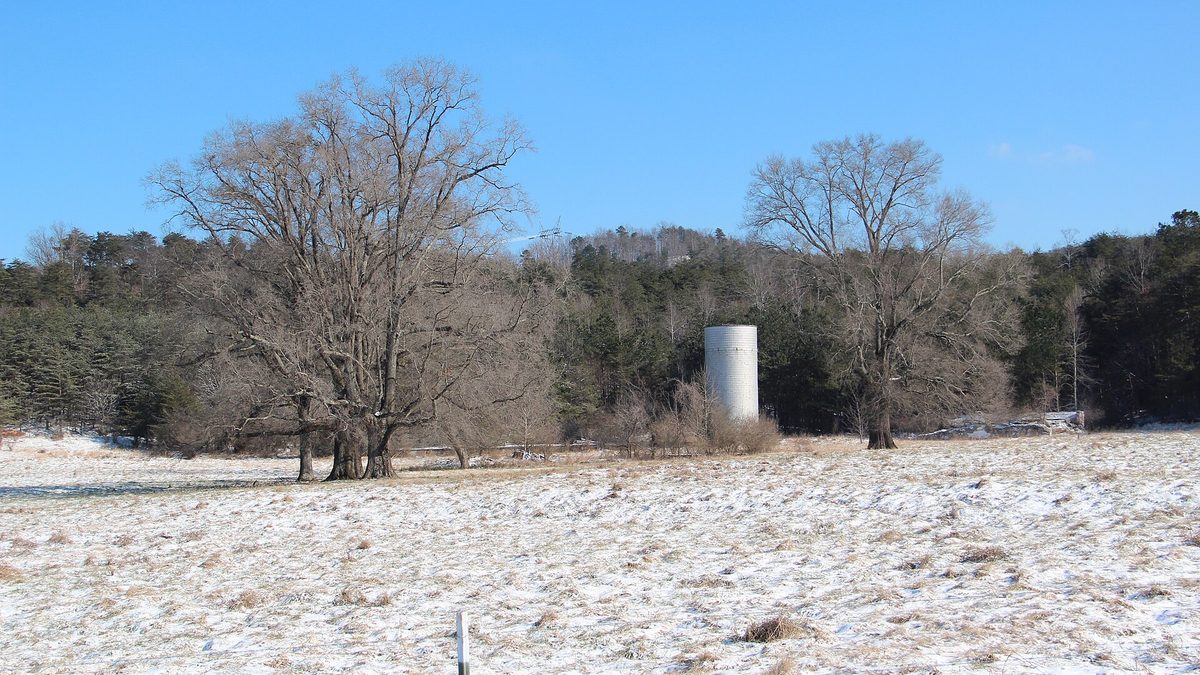
- Cover photograph: Lost Town Trail, Cherokee County, Georgia, January 2016, by Thomson200 via Wikimedia Commons (CC0)
Snowfall figures are official station observations and climate normals as published in July 2026. Conditions change: check the National Weather Service forecast for Peachtree City before you travel.
Topics
Frequently asked questions
Advertisement