Does It Snow in Arizona? Phoenix vs. Flagstaff, 5,879 Feet Apart

NWS records show Phoenix has seen measurable snow 7 times since 1917. Flagstaff, 140 miles north, averages over 100 inches a year. Here's why.
Advertisement
Yes, but which part of Arizona matters more than any other fact in this article. Phoenix has recorded measurable snow 7 times since weather records began there. Flagstaff, 140 miles north and nearly 5,900 feet higher, averages over 100 inches of snow a year. Both are Arizona. The National Weather Service keeps a dedicated page just for Phoenix's snow history, a sign of how rare the question actually is down there, and we opened it instead of repeating the "4 inches in 1937" line almost every other page uses.
Does it snow in Phoenix?
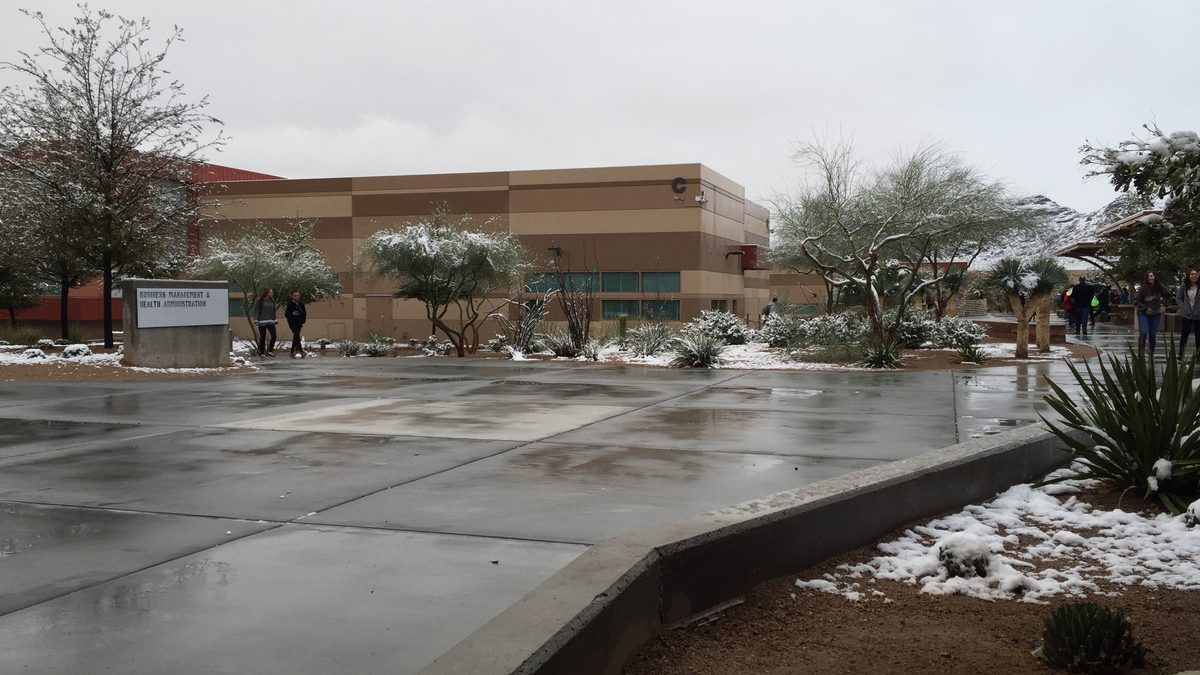
Rarely. The National Weather Service's Phoenix office counts 7 separate measurable snow events at the official station since record-keeping began, spread across 9 calendar days. The largest official reading is 1.0 inch, recorded twice: January 20, 1933, and January 21-22, 1937.
| Date | Amount |
|---|---|
| March 12, 1917 | 0.2" |
| November 28, 1919 | 0.1" |
| January 20, 1933 | 1.0" |
| January 21-22, 1937 | 1.0" |
| February 2, 1939 | 0.5" |
| December 11, 1985 | 0.1" |
| December 21-22, 1990 | 0.4" |
Nothing has been added to that table since 1990. A storm on December 6, 1998 brought snow to the northwest half of the valley and made local news, but the official gauge at Sky Harbor recorded only a trace, 0.22 inches of precipitation with no measurable snow depth, so the NWS does not count it among the 7.
What was Phoenix's biggest snowstorm?
By the official station record, January 20, 1933 and January 21-22, 1937 are tied at 1.0 inch each, the largest Phoenix has on the books. You will see "4 inches" quoted as the city's biggest snowfall far more often than "1 inch," and that number is not wrong so much as it is answering a different question.
The NWS's own page on the 1937 storm draws the distinction plainly: 1 inch was officially measured at the federal building at Central and Fillmore, the city's weather station at the time, while "up to 4 inches" was reported elsewhere across what is now the broader metro area. Those are two different measurements from two different kinds of sources, one official gauge and a scatter of unofficial reports, and most pages answering this question collapse them into a single number without saying which one they mean.
An even older account claims the city saw more than 6 inches in 1898, based on a contemporary estimate that snow was melting as fast as it fell. The NWS page itself flags this one as resting on local tradition rather than a measurement, since the station had only about 3 years of records at that point and none of them showed snow. We are repeating that caveat here because almost nobody else does.
Advertisement
Does it snow in Flagstaff?
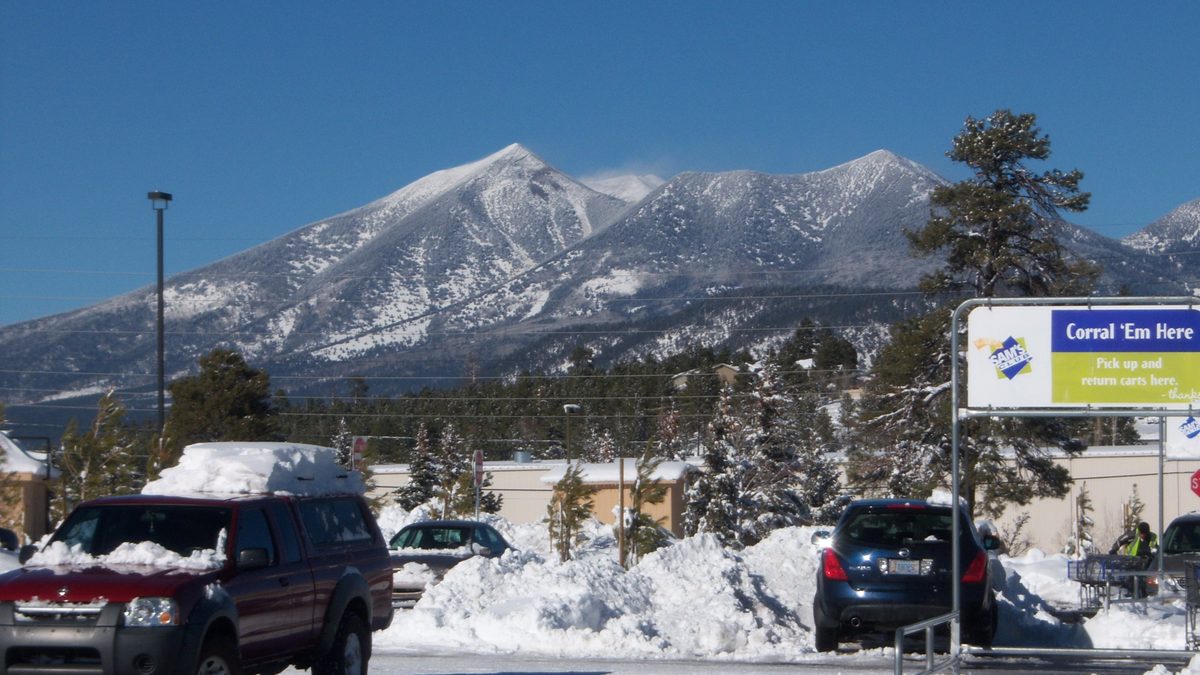
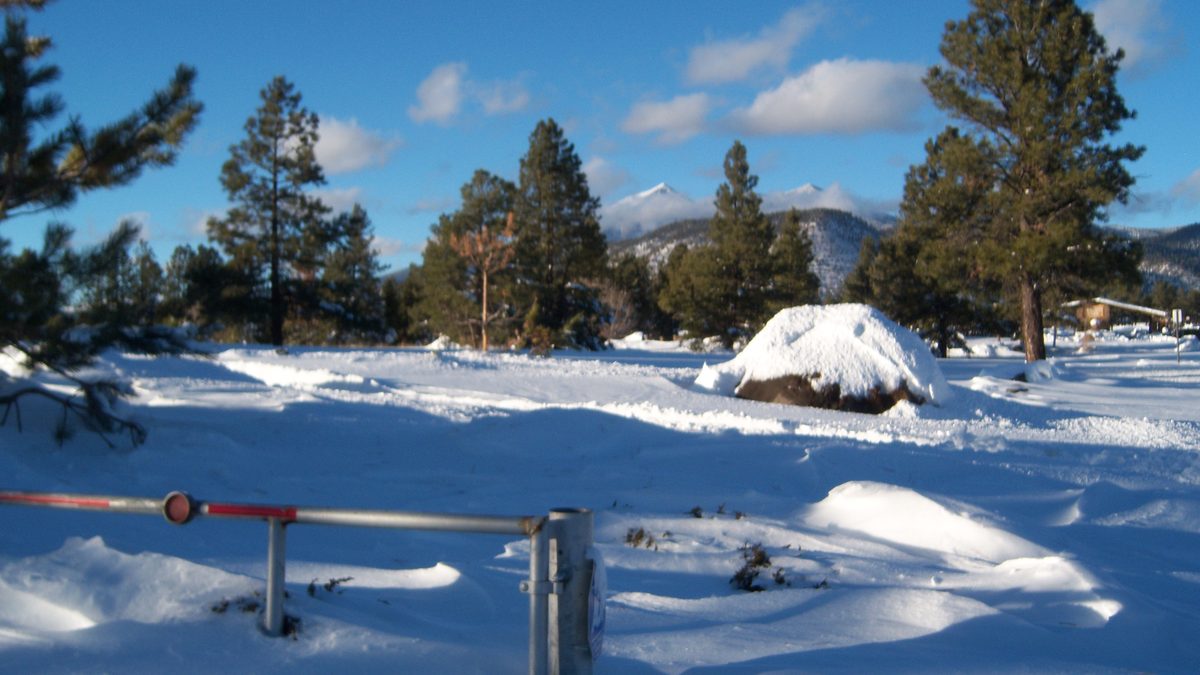
Yes, every winter, and substantially. NWS Flagstaff's own winter-outlook materials put the average at 101.7 inches a year, based on the 1981-2010 normal period. We could not find a published 1991-2020 snowfall normal for the station, only temperature and precipitation, so treat that figure as the most recent one actually on the record rather than the newest possible one.
The elevation does the explaining. Flagstaff Pulliam Airport sits at 7,014 feet, the same station behind that 101.7-inch figure. Nearby peaks run considerably higher still. The same stretch of Arizona that barely sees snow once a decade in the valley carries a real, lift-served winter at altitude.
One more thing the record makes clear: Flagstaff's cold extremes and Phoenix's rare snow events share dates more often than coincidence would suggest. Flagstaff's all-time low, -30°F, was recorded January 22, 1937, the same storm that gave Phoenix its tied snowfall record 140 miles south. When a system is strong enough to put snow on Phoenix's streets, it is usually doing something serious at altitude too.
Why do Phoenix and Flagstaff have such different climates?
Elevation, almost entirely. Phoenix Sky Harbor sits at 1,135 feet. Flagstaff Pulliam Airport sits at 7,014 feet. That is a 5,879-foot gap between two cities in the same state, roughly 140 miles apart by road.
If you are planning a single Arizona trip around seeing snow, our stance is the same one we took for Las Vegas and Lee Canyon: do not build it around the desert city. Phoenix's entire measurable-snow history since 1990 is one trace event that did not even register on the official gauge. Flagstaff, or the South Rim of the Grand Canyon at a comparable elevation, is where the odds actually favor you.
The honest downside cuts the other way too. If you are visiting Flagstaff specifically because you assume "Arizona" means desert heat year round, check the forecast before you go. Roughly 7 inches of snow falls there in an average December alone, going by the 101.7-inch annual figure spread across a five-month season.
What does this winter's El Niño outlook mean for Arizona?
NOAA's Climate Prediction Center put the odds of a strong-to-very-strong El Niño persisting through January-March 2027 above 83% in its October 8, 2026 ENSO discussion, with Nino-3.4 sea-surface temperatures at +2.1°C. Its October 16 winter outlook leans the Southwest, Arizona included, wetter than average for December through February.
That is a precipitation lean across three months, not a forecast for any single storm, and NOAA's own outlook does not predict snowfall totals. For Flagstaff, more storm chances generally means a better-than-even shot at a healthy season on top of an already-snowy normal. For Phoenix, more precipitation does not automatically mean more snow, since it still needs cold air in place at the same time, the same combination that produced the 1933, 1937, 1990 and other events on the table above. El Niño raises the odds of Phoenix getting an 8th measurable event. It does not promise one, and we are not going to print a number pretending otherwise.
What this record cannot tell you
Three real limits, stated plainly. Phoenix's official count depends entirely on one station. Flagstaff's cited snowfall average is a year behind the current normals period. And nothing here is a forecast for this winter.
One station, one city. The 7-event Phoenix table comes from a single official gauge, historically near Central and Fillmore and now at Sky Harbor. Other parts of the Phoenix metro, especially its higher northern edges like Cave Creek, can see snow the official station misses entirely.
Advertisement
Flagstaff's number is one normals cycle old. We found Flagstaff's current 1991-2020 climate normals, published by the Arizona State Climate Office from NOAA Regional Climate Centers data, and they do not include a snowfall figure, only temperature and precipitation. The 101.7-inch average comes from NWS Flagstaff's own 1981-2010 period materials instead. It is a real, sourced number. It is just not the newest one available.
This is research, not experience. This guide is built from NWS Phoenix's own published snowfall history, the Arizona State Climate Office's normals, and NOAA's current outlook. Nobody on this team has been in Flagstaff during a snow season this year, and we are not meteorologists. For a forecast on a specific day, the National Weather Service offices covering Phoenix and Flagstaff are the ones to check.
Common questions
How often does it snow in Phoenix?
Measurable snow has reached the official Phoenix station 7 times on record, most recently in December 1990. Trace amounts that never registered a depth have happened more often but are not individually dated in the NWS record.
Has it ever snowed on Christmas in Phoenix?
Not by the official record. None of the 7 dated snow events at the Phoenix station fall on December 25. The closest is December 21-22, 1990, three days before Christmas.
Does it snow at the Grand Canyon?
The South Rim sits at an elevation close to Flagstaff's, around 7,000 feet, and gets a comparable winter. The inner canyon and the Colorado River, thousands of feet lower, stay far warmer and rarely see snow stick.
Is Sedona snowy in winter?
Sedona sits at a lower elevation than Flagstaff, roughly 4,300 feet against Flagstaff's 7,014, so it sees snow occasionally rather than every winter. It gets more than Phoenix and considerably less than Flagstaff, in keeping with the elevation pattern that explains the rest of this page.
Why does Flagstaff get so much more snow than Phoenix if they're in the same state?
A 5,879-foot elevation difference between the two official stations. Temperature drops with altitude, and Flagstaff sits high enough, at 7,014 feet, to stay cold through winter storms that pass over Phoenix as rain.
Sources
- Phoenix snowfall history, all 7 dated events and the 1937 and 1898 storm detail: National Weather Service Phoenix, "Phoenix Snowfall", pulled 30 October 2026.
- Flagstaff 1991-2020 climate normals (temperature, precipitation, extremes; no snowfall figure included): Arizona State Climate Office, "Flagstaff, Arizona: Normals, Means, and Extremes", sourced from NOAA Regional Climate Centers, pulled 30 October 2026.
- Flagstaff 101.7-inch average annual snowfall (1981-2010 period): NWS Flagstaff winter outlook materials, pulled 30 October 2026.
- Phoenix Sky Harbor elevation (1,135 ft) and Flagstaff Pulliam Airport elevation (7,014 ft): FAA-surveyed airport data, pulled 30 October 2026.
- Current ENSO status and strength forecast: NOAA Climate Prediction Center ENSO Diagnostic Discussion, issued 8 October 2026.
- Winter 2026-27 precipitation and temperature outlook: NOAA Climate Prediction Center U.S. Winter Outlook, released 16 October 2026.
- Cover and in-body photos: Deborah Lee Soltesz, via Wikimedia Commons, CC0.
This page is part of the same desert-contrast cluster as Las Vegas and the same winter season as Colorado, all pulled from the relevant city or state's own official record. It also links up to our USA snow predictions hub.
Topics
Advertisement