Snow Predictions For Colorado 2026-2027

Denver's median first snow is 18 October. In seven strong El Nino winters since 1950, southern Colorado ran well above normal and Steamboat ran below.
Advertisement
Colorado is coming off the worst snow season in its recorded history at three long-running weather stations, and heading into a winter that NOAA expects a very strong El Nino to steer. Those two facts pull in opposite directions, which is why the snow predictions for Colorado in 2026-2027 need a number nobody else on this page's search results will give you: how often the pattern actually delivered, measured against 76 years of station records.
This is a research guide built from National Weather Service station records and official NOAA outlooks. We have not skied a Colorado season ourselves, so every figure here is computed from published observations and dated, not remembered.
Will it snow in Colorado this winter?
Yes, everywhere in the state, and that has never been the question in Colorado. Every station we checked has recorded snow in every single season of its record, going back to 1950. The real question is how much, and where, and that is where the honest answer gets uncomfortable.
Even in its worst season on record, Steamboat Springs still measured 80.6 inches. Grand Junction, the driest place in this guide, has never finished a winter blank. Colorado does not have the "will it snow at all" problem that Georgia or coastal North Carolina have. It has a volume problem, and last winter was the sharpest reminder in living memory.
What are the snow predictions for Colorado in 2026-2027?
No forecaster publishes a seasonal snowfall total for Colorado, and any page showing you one for 2026-2027 made it up. What officially exists is a probability outlook. NOAA's Climate Prediction Center favours above-normal precipitation across the southern tier of the country this winter, and issues no inches.
Here is exactly what the official sources say, in their own terms, as of August 2026:
| Source | What it actually publishes | Snowfall total? |
|---|---|---|
| NOAA CPC ENSO discussion, 9 July 2026 | El Nino Advisory in force. Nino-3.4 at +1.2 C. An 81% chance of a very strong El Nino during October to December, and a 97% chance it persists through early spring 2027 | No |
| NOAA CPC seasonal outlook, 16 July 2026 | Above-normal precipitation favoured over the southern tier for winter 2026-2027, with 33 to 40% odds of near-normal temperatures over parts of the Southwest | No |
| Farmers' Almanac winter 2026-27 | Colorado described as "cold, snowy at times, and breezy" with fast-moving storms and brief snowy periods | No |
| Any site quoting "Colorado will get X inches" | Nothing. There is no model that produces this | Invented |
The Farmers' Almanac line is worth reading carefully. It is a description, not a measurement, and the Almanac does not publish a verification record for its Colorado forecasts. We are quoting it because readers ask about it, not because it carries the same weight as the CPC.
So the useful question is not what the forecast says. It is what a very strong El Nino has historically done to Colorado snow, which is answerable from the record.
What does El Nino mean for Colorado snow?
It splits the state. In the seven strong El Nino winters since 1950, southern Colorado ran well above normal and northern Colorado did not. Telluride averaged 52% above its normal, Alamosa 64% above. Steamboat Springs averaged 5% below, and Vail 15% below.
We took every winter since 1950 where NOAA's own Oceanic Nino Index reached +1.5 C or higher for December to February, which is the agency's threshold for a strong event, then pulled what each Colorado station actually recorded in those seasons. Seven winters qualify: 1957-58, 1972-73, 1982-83, 1991-92, 1997-98, 2015-16 and 2023-24.
| Station | Normal season | Strong El Nino average | Difference | Seasons above normal |
|---|---|---|---|---|
| Alamosa | 27.9" | 45.8" | +64% | 6 of 7 |
| Colorado Springs | 33.9" | 52.0" | +53% | 7 of 7 |
| Telluride | 129.4" | 196.9" | +52% | 5 of 7 |
| Denver | 49.6" | 71.7" | +45% | 6 of 7 |
| Pueblo | 28.6" | 34.3" | +20% | 4 of 7 |
| Grand Junction | 17.1" | 19.9" | +17% | 3 of 7 |
| Aspen | 169.3" | 176.6" | +4% | 4 of 5 |
| Crested Butte | 193.7" | 199.8" | +3% | 4 of 7 |
| Boulder | 94.1" | 96.5" | +3% | 3 of 7 |
| Fort Collins | 52.0" | 51.6" | -1% | 3 of 7 |
| Steamboat Springs | 172.6" | 164.3" | -5% | 2 of 7 |
| Vail | 191.2" | 162.5" | -15% | 0 of 3 |
Read the last column, not the percentage. Colorado Springs finished above normal in all seven, which is the single most consistent signal in the table. Steamboat managed it twice in seven. Vail has only three qualifying seasons in its shorter record and finished below normal in all three.
This is the point most coverage skips. "El Nino is good for Colorado" is half true and half backwards. It has been reliably good for the San Juans, the San Luis Valley and the Front Range cities. For Steamboat and Vail, the two northern resorts people search for most, the record leans mildly against it.
The honest limits: seven seasons is a small sample, Vail contributes only three and Aspen five, and no two El Nino winters set up the same way. A 5% difference across seven seasons is noise. The 53% at Colorado Springs, going 7 for 7, is the part worth acting on.
When will it snow in Denver in 2026?
The median date of Denver's first measurable snow is 18 October. Across 78 seasons the first snow has landed in September 24% of the time, October 54%, November 19% and December 3%. Denver has a 78% chance of measurable snow by 31 October and a 97% chance by 30 November.
Nobody can name the date this far out, but the distribution is tighter than most people expect. We computed it from the daily record at Denver-Central Park, the National Weather Service co-op site that has measured the city's snow since 1948.
| Denver's first measurable snow | Date |
|---|---|
| Earliest in 78 seasons | 3 September |
| 10% of seasons by | 19 September |
| Median | 18 October |
| 90% of seasons by | 10 November |
| Latest in 78 seasons | 10 December |
The last twelve first-snow dates show how wide the spread stays: 11 Nov, 5 Nov, 18 Nov, 9 Oct, 14 Oct, 11 Oct, 9 Sep, 10 Dec, 4 Nov, 28 Oct, 6 Nov, 3 Dec. Two of the last five have come in December, which is late by any historical standard.
Advertisement
At the other end, Denver's last measurable snow falls around 29 April in a median year, and one season in ten runs past 21 May. The latest on record is 5 June. If you are planning an October trip and the forecast is bare, that is normal: 21 of the last 78 Octobers produced no measurable snow in Denver at all.
How much snow does Denver get a year?
Denver averages 49.6 inches a season on the 1991-2020 normal, measured at Denver-Central Park. Its snowiest season on record was 99.3 inches in 1958-59. Its two leanest in 76 seasons were 24.6 inches in 2010-11 and 24.7 inches last winter, which means the city has just been through the second-worst winter in its record.
One wrinkle worth knowing before you compare numbers with another site. Denver's official climate record moved to Denver International Airport in 1995, and DIA sits further out on the plains where upslope storms hit harder. DIA recorded 33.1 inches in 2025-26 against Central Park's 24.7. Both are correct. They are different places.
Denver snowfall by month
March is Denver's snowiest month at 9.6 inches, then February at 8.1. That surprises most visitors, who assume January. January averages 6.0 inches and is only the fifth snowiest month of the Denver year, behind March, February, November and December.
| Month | Denver average | Share of season |
|---|---|---|
| September | 0.8" | 2% |
| October | 3.9" | 8% |
| November | 7.3" | 15% |
| December | 6.6" | 13% |
| January | 6.0" | 12% |
| February | 8.1" | 16% |
| March | 9.6" | 19% |
| April | 6.0" | 12% |
| May | 1.3" | 3% |
The practical version: Denver gets 31% of its snow in March and April, after the ski marketing has moved on. Boulder tilts later still. Its snowiest month is March at 16.7 inches, and April at 14.7 outranks both December and January.
How much snow does Colorado get a year?
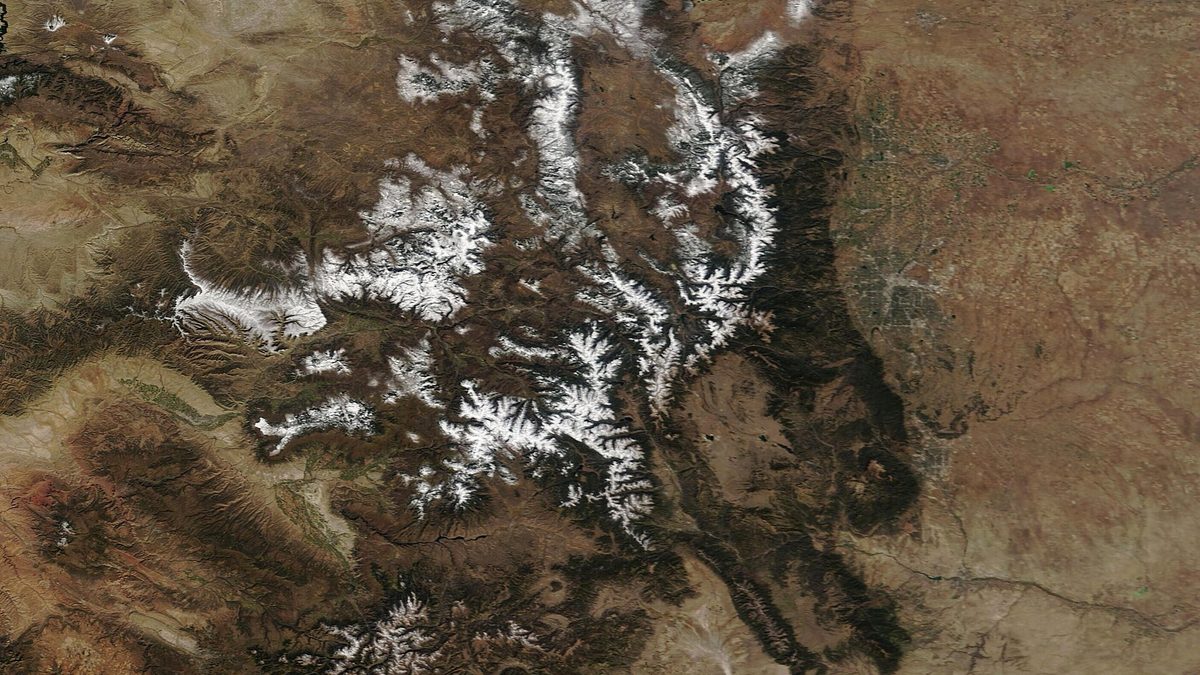
There is no single Colorado number, and averaging the state produces a figure that describes nowhere. Crested Butte averages 193.7 inches a season. Grand Junction, roughly 100 miles west, averages 17.1. That is an eleven-fold gap inside one state, driven almost entirely by elevation and which side of the divide you stand on.
| Place | 1991-2020 average | Snowiest season on record | 2025-26 |
|---|---|---|---|
| Crested Butte | 193.7" | 354.5" (1964-65) | 92.9" |
| Vail | 191.2" | 280.1" (1995-96) | 97.1" |
| Steamboat Springs | 172.6" | 266.8" (1973-74) | 80.6" |
| Aspen | 169.3" | 276.0" (1983-84) | 106.4" |
| Telluride | 129.4" | 311.5" (1983-84) | 45.4" |
| Boulder | 94.1" | 152.0" (2019-20) | 41.4" |
| Fort Collins | 52.0" | 114.1" (1979-80) | 22.1" |
| Denver | 49.6" | 99.3" (1958-59) | 24.7" |
| Colorado Springs | 33.9" | 89.4" (1956-57) | 26.3" |
| Pueblo | 28.6" | 69.6" (1989-90) | 14.1" |
| Alamosa | 27.9" | 97.5" (1972-73) | 11.1" |
| Grand Junction | 17.1" | 52.5" (1978-79) | 7.4" |
These are town and valley-floor stations, not summit or mid-mountain gauges. A resort quoting 300 inches is measuring at 10,000 feet or higher on its own snow stake, and both figures can be true at once. We use the official stations because they have decades of consistent measurement behind them, which resort stakes generally do not.
How bad was Colorado's 2025-2026 winter?
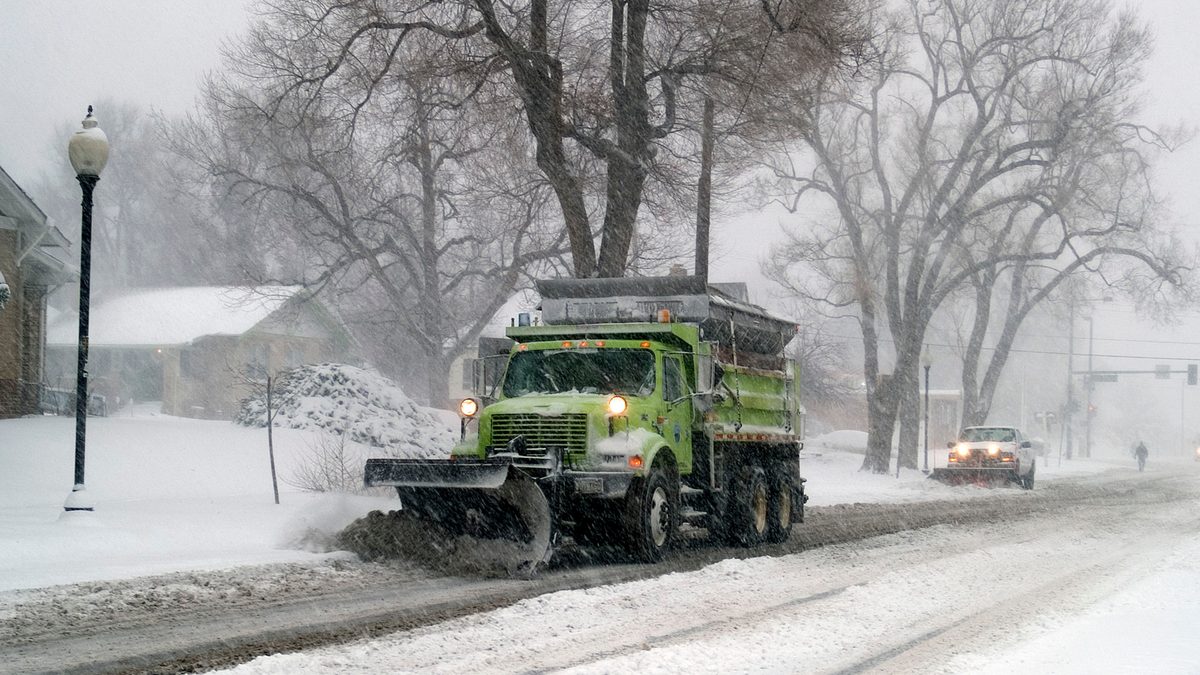
It was the worst season in the entire record at three stations. Fort Collins finished last of 75 seasons, Steamboat Springs last of 73, and Telluride last of 69. Denver, Vail, Aspen and Crested Butte all finished second worst. Colorado's snowpack hit a record low statewide.
Look back at the right-hand column of the table above and the scale becomes obvious. Steamboat took 80.6 inches against a 172.6 inch normal. Telluride took 45.4 against 129.4. Alamosa took 11.1 inches for the whole season.
The Colorado Climate Center at Colorado State University called it the state's worst snowpack on record for the time of year, worse than 1976-77 and 1980-81, the two seasons Colorado skiers have used as the benchmark for a disaster winter for four decades. The cause was heat rather than a lack of storms: Fort Collins logged 43 days at 60 F or above during the winter, against a previous record of 22 set in 1980-81.
One thing that matters for reading any 2026-2027 forecast: last winter was not an El Nino winter. The December to February ONI came in at -0.39, which is neutral leaning weak La Nina. Whatever went wrong last season, El Nino was not the reason, and its absence is not evidence about the season ahead.
What is the snowiest place in Colorado?
Among the towns with long official records, Crested Butte is the snowiest at 193.7 inches a season, just ahead of Vail at 191.2. Wolf Creek Pass in the San Juans is the state's snowiest measured location, but its co-op station stopped reporting in 2001, so it has no current normal to quote.
Advertisement
Wolf Creek is worth naming anyway, because it sits exactly where the El Nino signal in the table above is strongest. Its ski area advertises the most snow in Colorado, and the two long-record stations flanking that corner of the state, Telluride and Alamosa, are the two with the biggest El Nino boost in our numbers. We are flagging the pattern, not certifying the resort's own snow claim, which we cannot verify from official data.
If your definition of snowiest is "which place is most likely to be deep in a strong El Nino year", the record points at the southern mountains. If it is "which place averages the most, every year", it is Crested Butte.
What months does it snow in Colorado?
Measurable snow falls somewhere in Colorado in nine months, September through May. The mountains and the plains peak at different times: Steamboat and Crested Butte peak in January, while Denver, Boulder and Fort Collins peak in March. That two-month gap is the most useful thing on this page for planning a trip.
- September: real but thin. Denver averages 0.8 inches and has had first snow this month in 24% of seasons.
- October: the mountains start. Aspen averages 9.5 inches, Vail 8.7. Denver averages 3.9 and goes blank in 27% of Octobers.
- November to February: the mountain core. Steamboat averages 40.0 inches in January alone, Crested Butte 40.5.
- March: the Front Range peak. Denver 9.6, Boulder 16.7, Fort Collins 10.1.
- April: still substantial. Vail averages 23.4 inches, Boulder 14.7.
- May: mountains only, mostly. Crested Butte and Vail average 6.4 and 6.8 inches.
Does it snow in Colorado Springs, and in which months?
Yes, about 33.9 inches a season spread across nine months, and it has never had a snowless winter in 74 years of record. March is the snowiest month at 6.1 inches, then April at 5.4. Colorado Springs gets more snow in April than in December.
That April figure catches visitors out repeatedly. The city's snow season is built around spring upslope storms coming off the plains into the Palmer Divide, not midwinter mountain systems, so the calendar runs about two months later than a ski-town calendar.
Colorado Springs is also the station in this guide with the cleanest El Nino record: above normal in all seven strong events since 1950. If the CPC's 81% call on a very strong El Nino verifies, this is the Colorado city where history most consistently backs a snowier than usual winter. That is a base rate, not a forecast.
When does the Colorado ski season start in 2026?
Opening dates track cold nights rather than snowfall, because the early season runs on machine-made snow. Colorado's highest areas typically open in the second half of October, and resorts publish their own target dates in late summer. Natural snow at resort-town elevation stays thin until November.
The station record explains why. Vail town averages 8.7 inches of natural snow in October and 25.4 in November. Steamboat averages 6.9 in October and 21.9 in November. October snow at those elevations is a coating, not a base, which is why opening day depends on how many nights the snowmaking guns can run.
Check the resort's own page for the 2026-2027 opening date rather than a roundup. Those dates move with the weather and are frequently revised in both directions.
When is the best time to see snow in Colorado?
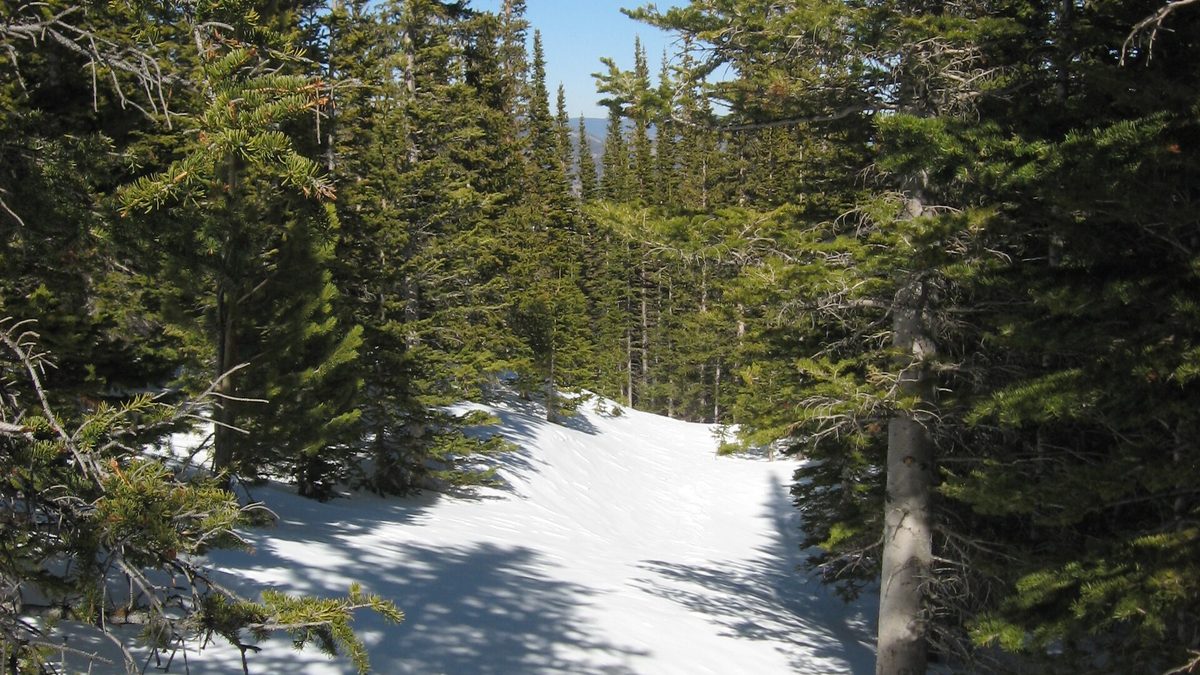
Late January to mid March, and go to the mountains rather than the cities. January and February are when the high country holds the deepest continuous snowpack, and March adds the Front Range peak on top. If you want one month, take February: it ranks in the top three at almost every station here.
Our recommendation, and it goes against how most Colorado trips get booked: skip the Christmas and New Year window if snow is the reason you are coming. Late December is the most expensive fortnight of the Colorado year and it is not the snowiest. Steamboat averages 36.5 inches in December against 40.0 in January. Denver averages 6.6 in December against 9.6 in March. You are paying peak rates for a below-peak month.
Who should not plan a Colorado snow trip at all: anyone who needs certainty about a specific week. Two of Denver's last five first-snow dates landed in December, and last season three stations set all-time low records. The state delivers snow reliably across a season. It does not deliver it reliably across seven days.
For the same station-record treatment of other states, see our guides to snow in North Carolina, Virginia, Maryland and Tennessee.
Sources
- NOAA Climate Prediction Center, ENSO diagnostic discussion (9 July 2026) and seasonal outlook discussion (16 July 2026)
- NOAA Climate Prediction Center, Oceanic Nino Index, used to select the strong El Nino winters on this page
- Station snowfall records for Denver-Central Park, Denver International Airport, Boulder, Fort Collins, Colorado Springs, Pueblo, Alamosa, Grand Junction, Steamboat Springs, Crested Butte, Vail, Aspen and Telluride, retrieved 9 August 2026 from the Regional Climate Centers ACIS data service. Every average, ranking and first-snow date on this page was computed from those records
- Colorado Climate Center, Colorado State University, on the record-low 2025-26 snowpack
- Farmers' Almanac winter 2026-27 outlook, as reported by the Denver Gazette, 6 August 2026
Seasons run 1 July to 30 June and are labelled by the starting year. Seasons missing more than one month of observations were excluded rather than counted as zero, which is why the number of usable seasons differs by station. Vail and Telluride have the thinnest records here, at 22 and 24 usable seasons in the 1991-2020 window.
Topics
Frequently asked questions
Advertisement