Snow Predictions For North Carolina 2026-2027

Mount Mitchell averages 89 inches of snow a season and Wilmington under an inch. NWS station records by region, plus the honest 2026-2027 outlook.
Advertisement
North Carolina holds the widest snowfall gap of any state on the east coast. Mount Mitchell averages close to 90 inches a season. Wilmington, 300 miles away, averages under an inch and has finished 34 of the last 76 winters with none at all. For 2026-2027 the NOAA Climate Prediction Center favours near-normal temperatures and above-normal precipitation, and publishes no snowfall total.
This is a research guide built from National Weather Service station records and official NOAA outlooks. We have not spent a winter in the North Carolina mountains ourselves, so every number here is sourced and dated rather than remembered.
Will it snow in North Carolina this winter?
In the mountains, almost certainly. Boone has not recorded a snowless season in 46 years of record, and Banner Elk none in 72. In Charlotte and Raleigh most winters bring something, though eight of the last 76 brought nothing. On the coast, probably not.
Where you stand decides this far more than which year it is.
That is the part most winter forecasts skip. They give a state a single verdict when North Carolina behaves like three separate climates stacked against each other. Here is what actually separates them.
How much snow does North Carolina get?
These are seasonal averages for the 1991-2020 period at eight official weather stations, arranged by elevation. The season runs 1 July to 30 June, so "2025-26" means the winter that ended in spring 2026.
| Location | Elevation | Season average | Seasons with zero snow | Snowiest on record |
|---|---|---|---|---|
| Mount Mitchell | 6,640 ft | 89.4" | 0 of 51 | 1997-98, 176.0" |
| Banner Elk | 3,730 ft | 37.6" | 0 of 72 | 1959-60, 100.7" |
| Boone | 3,100 ft | 27.0" | 0 of 46 | 1986-87, 78.5" |
| Asheville | 2,118 ft | 10.3" | 4 of 67 | 1968-69, 48.2" |
| Greensboro | 902 ft | 7.1" | 5 of 76 | 1959-60, 31.7" |
| Charlotte | 730 ft | 3.5" | 8 of 76 | 1959-60, 22.6" |
| Raleigh | 395 ft | 5.2" | 8 of 76 | 1999-00, 25.8" |
| Wilmington | 23 ft | 0.9" | 34 of 76 | 1989-90, 15.3" |
Two notes on how that table was built, because most pages quoting these figures do not say. The averages for Asheville, Greensboro, Charlotte, Raleigh and Wilmington are NOAA's published 1991-2020 normals. For Mount Mitchell, Banner Elk and Boone no normal is published in the same form, so we computed the mean ourselves from the station record held by the Regional Climate Centers. As a check we ran the same calculation on the five stations that do have a published normal, and our figure matched to within a tenth of an inch at every one. Mount Mitchell's is a threaded record with 25 of the 30 seasons complete, so treat it as the weakest number on the table.
The spread is the point. Mount Mitchell averages roughly a hundred times what Wilmington does, inside one state, and Boone has never once finished a winter with nothing while Wilmington has done it in 45% of its recorded seasons.
One line in that table surprises almost everybody, including people who live there. Raleigh averages half again more snow than Charlotte, despite sitting lower and 130 miles further east. It is a real and durable feature of the record, not a rounding artefact. It is also completely unreliable storm to storm, which last winter demonstrated at some cost to Raleigh.
Does it snow in Charlotte, NC every year?
No. Charlotte finished eight of the last 76 seasons with no measurable snow, including two of the last four. The 3.5 inch average is also misleading on its own, because it is built from a few large winters rather than a steady trickle. Most Charlotte winters land well under that figure.
What Charlotte does get, occasionally, is a lot at once. Its record season is 22.6 inches in 1959-60, and last winter it took 12.2 inches, which ranks 8th of 76 seasons and was the city's snowiest since 2003-04. All but 0.4 inches of it fell in January, and the state climate office puts the season's largest event on 31 January and 1 February 2026.
The practical reading for anyone planning around Charlotte: expect nothing, and expect the city to shut down if something does arrive. Three inches in a place that averages three and a half a year does not meet prepared roads.
Does it snow in Raleigh every year?
Also no, and on almost identical odds to Charlotte: eight blank seasons in 76. Raleigh's 5.2 inch average is the higher of the two, and its record season is 25.8 inches, set in 1999-2000.
Raleigh's snow arrives from a different direction to the mountains'. Western North Carolina takes northwest flow behind cold fronts, which delivers small amounts often. Raleigh depends on coastal storms tracking close enough to the shore to throw moisture inland while cold air is still in place. That is a narrower target, which is why Raleigh's record contains both 25 inch seasons and repeated zeros.
Last winter it missed. Raleigh's entire January was 3.4 inches while Charlotte took 11.8, and the season finished at 3.6 inches, below Raleigh's own normal, in a winter the rest of the piedmont called exceptional.
Does it snow in Asheville, and in which months?
Yes, most years, and mainly in January. Asheville Regional Airport averages 10.3 inches a season, spread over roughly four months, and has recorded only four snowless seasons in 67 years. January alone carries 3.7 inches of that total, more than any other month by a clear margin.
| Month | Asheville average | Boone average | Mount Mitchell average |
|---|---|---|---|
| November | 0.2" | 0.9" | 3.6" |
| December | 2.4" | 5.7" | 18.2" |
| January | 3.7" | 7.9" | 21.3" |
| February | 2.0" | 6.5" | 18.7" |
| March | 1.8" | 4.8" | 17.6" |
| April | 0.2" | 1.0" | 8.1" |
Two things worth pulling out of that. Asheville in December averages 2.4 inches, so a Christmas visit built on expecting snow in the city is a gamble. And Mount Mitchell still averages 8.1 inches in April, after Asheville has effectively finished for the year. The mountain seasons run about two months longer than the valley ones.
Asheville is also the station with the sharpest recent decline on this list. Its 1991-2020 average is 10.3 inches; across the sixteen seasons since 2010 the actual mean has been 7.5.
How much snow does Boone, NC get a year?
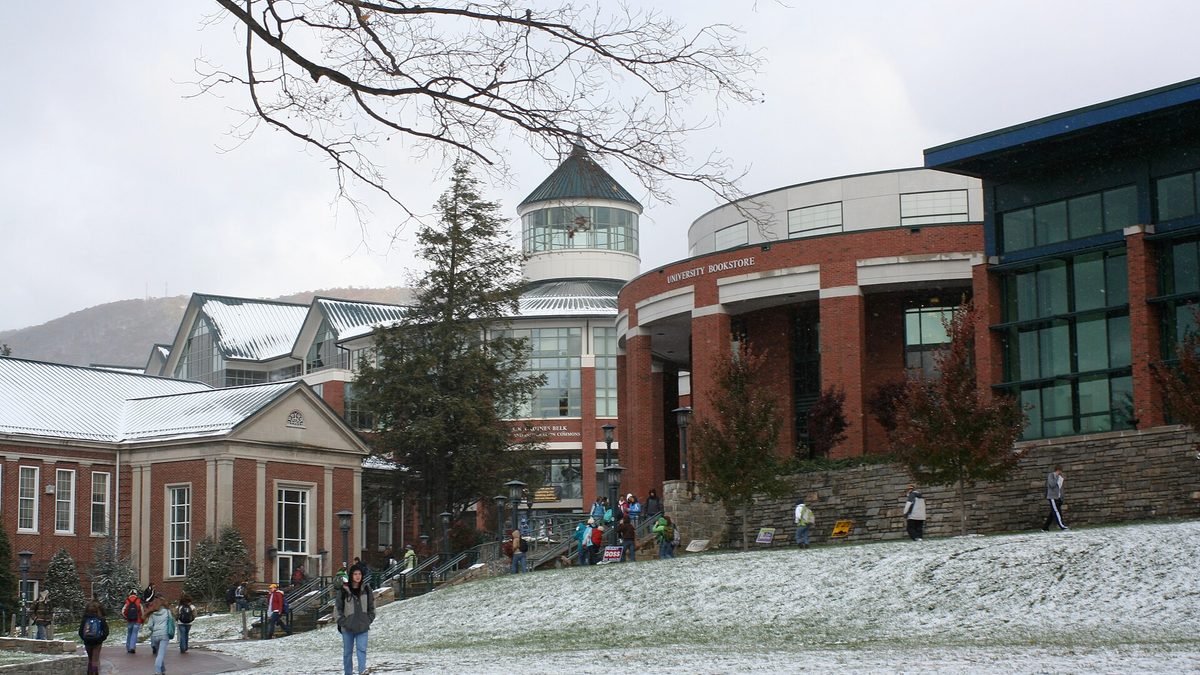
Boone averages 27.0 inches a season at the long-running station a mile southeast of town, at 3,100 feet. That is roughly eight times Charlotte and thirty times Wilmington. Boone has not finished a single one of its 46 recorded seasons without snow, and its biggest was 78.5 inches in 1986-87.
Advertisement
Nearby Banner Elk, 600 feet higher at 3,730 feet, averages 37.6 inches. That 600 feet of elevation is worth another 10 inches a season, which is the clearest illustration on this page of how steeply snowfall climbs with height in the southern Appalachians.
Boone's recent record has run below its own normal, at 20.2 inches averaged across the sixteen seasons since 2010. It has still never had a blank one.
Why the coast beat the mountains last winter
Winter 2025-26 ran North Carolina backwards, and it is the most useful thing in the recent record for understanding how little a seasonal outlook can tell you. The piedmont and the coast had one of their best winters in decades while the mountains finished below normal.
| Location | 2025-26 total | Normal | Versus normal | Rank |
|---|---|---|---|---|
| Wilmington | 5.8" | 0.9" | 6.4x | 6th of 76, snowiest since 1999-00 |
| Charlotte | 12.2" | 3.5" | 3.5x | 8th of 76, snowiest since 2003-04 |
| Greensboro | 12.5" | 7.1" | 1.8x | 21st of 76 |
| Raleigh | 3.6" | 5.2" | 0.7x | 45th of 76 |
| Boone | 21.3" | 27.0" | 0.8x | 30th of 46 |
| Asheville | 5.4" | 10.3" | 0.5x | 47th of 67 |
| Mount Mitchell | 50.2" | 89.4" | 0.6x | 42nd of 51 |
Wilmington, the station that goes blank in nearly half its winters, had its 6th snowiest season in 76 years. Mount Mitchell, the snowiest place in the eastern United States, had its 42nd best out of 51. The cause was a single offshore low on 31 January and 1 February 2026 that tracked close enough to the coast to hit the flatlands and left the mountains out of it.
Statewide it was not even a cold winter. North Carolina averaged 40.8°F, which is 0.3°F below the 20th century average and only the 54th coolest of 132 years on record, and it was the 8th driest winter since 1895. One storm on one favourable track produced a top-ten season for two cities inside an otherwise dry, unremarkable winter.
That is what a seasonal forecast cannot see, and why nobody should book on one.
When does it snow in North Carolina?
January is the peak everywhere in the state. Outside the mountains, the useful window is roughly mid-December to early March and nothing else. In the high country it opens in November and does not close until April, and on Mount Mitchell it can snow in May.
The recent record also holds two seasons that deserve to be read as a warning about averages.
In 2022-23 and again in 2023-24, Asheville, Greensboro, Charlotte, Raleigh and Wilmington all recorded exactly zero. Not a trace between them, across two consecutive winters. Those are the only two seasons in 76 years of record where all five stations went blank together, and they happened back to back, two years before Charlotte's 8th snowiest season on record.
Averages describe the long run. They tell you almost nothing about the winter you are about to book.
Does El Nino mean more snow in North Carolina?
It means more storms, not more snow, and the two are not the same thing in a state this warm. A strong El Nino pushes the subtropical jet stream south, which sends more moisture across the Carolinas. It also tends to suppress the Arctic outbreaks that supply the cold. North Carolina snow needs both to arrive on the same day.
Here is the full published position for 2026-2027, rechecked on 26 August 2026:
| Source | Status | What it says |
|---|---|---|
| NOAA CPC, ENSO discussion | Issued 13 August 2026 | El Nino Advisory in effect. A greater than 90% chance of a very strong event through the fall and winter, and a 69% chance the October to December peak exceeds every El Nino since 1950. July Nino-3.4 at +1.4°C. No snowfall figure |
| NOAA CPC, seasonal outlook | Issued 20 August 2026 | Near-normal temperatures favoured across much of the southeastern United States from November onward, where cool El Nino effects and warm trends oppose each other. Above-normal precipitation probabilities exceed 60% across parts of the Southeast by November to January. No snowfall figure, by policy |
| Old Farmer's Almanac | Checked 26 August 2026 | Its Charlotte page was still showing a twelve-month outlook labelled "November 2025 to October 2026", which is last winter. That text calls for below-normal precipitation with snowfall above normal in the east of the state |
| Farmers' Almanac | Published August 2026 | "A Wet and Stormy Southern Tier", with an active storm track and storms that "could produce sleet, freezing rain, or heavy, wet snow". No total. See the note below about its announced closure |
| AccuWeather | Not yet published | Last year's US winter forecast appeared in October |
The Farmers' Almanac row needs explaining, because the situation is genuinely odd and most pages get it wrong in one direction or the other. In November 2025 the publication announced it was closing after more than 200 years. That notice is still posted, was last updated on 27 July 2026, and says the 2026 edition would be its final one and that the Almanac "will no longer be available in print or online". It then carried on publishing. Its 2026-2027 winter forecast went out in August 2026, Fox Weather and the wire services covered it, and the site is still posting new articles. The forecast is real and current, the closure notice is real and still live, and both of those are true at the same time.
One further trap in the same area. The Farmers' Almanac and the Old Farmer's Almanac are two separate publications that get mistaken for each other constantly, and they disagree this winter: one calls for a wet and stormy southern tier, and the other is still displaying text written for last winter.
The second thing that follows from the table is simpler. Any page printing a North Carolina snowfall total for 2026-2027 has invented it. Neither almanac publishes one, and NOAA does not issue seasonal snowfall totals for cities at all, only probabilities for temperature and precipitation.
Our position, and it is the same one we take on snow in Georgia and Virginia: treat a strong El Nino as a reason to expect a wetter, stormier winter with more chances of something falling, and no reason at all to expect a snowier one. Book on elevation, not on the ENSO forecast.
Where does it snow the most in North Carolina?
Mount Mitchell, whose summit at 6,684 feet is the highest point in the United States east of the Mississippi, and it is not close. Its seasonal average of roughly 89 inches is more than double Banner Elk's and eight times Asheville's. It is also the only place in the state where snow is normal in both November and April.
For places you can actually book a bed in, the order runs:
Advertisement
- Banner Elk, 3,730 ft. 37.6 inches a season, and the base town for both of the state's largest ski areas. Took 30 inches in the March 1993 storm.
- Beech Mountain. Bills itself as the highest incorporated town in the eastern United States, and sits well above Banner Elk. There is no long-running weather station there, so no verifiable seasonal average exists.
- Blowing Rock and the Boone area, 3,100 to 4,000 ft. Boone's 27.0 inch average is the best-documented in the high country, from a 46 year unbroken record.
- Jefferson and Ashe County, around 3,000 ft. Took two feet in March 1993.
- Asheville, 2,118 ft. 10.3 inches. Worth the trip for the city, not for the snow.
What are North Carolina's biggest snowstorms on record?
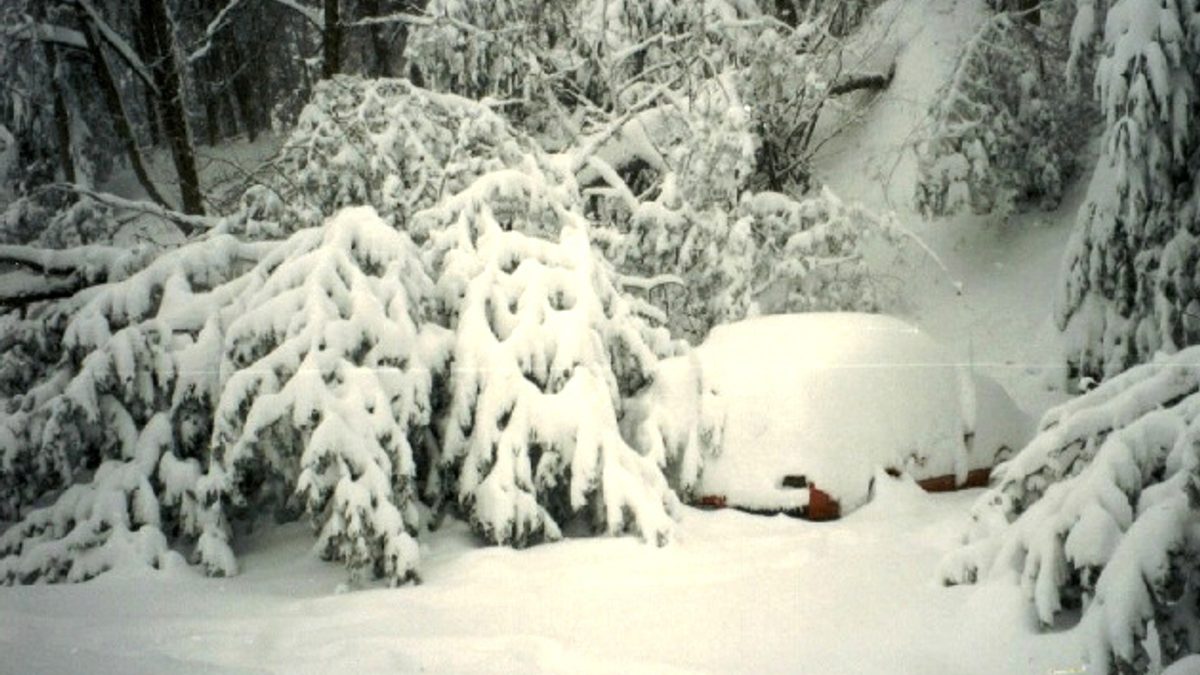
One storm holds both state records and has held them for over thirty years. The Superstorm of 12 to 13 March 1993 dropped 36 inches on Mount Mitchell in 24 hours, still the state's 24-hour record, and 50 inches in total, still the state's storm record.
| Location | March 1993 total |
|---|---|
| Mount Mitchell | 50 inches |
| Blowing Rock | About 3 feet |
| Boone and Banner Elk | 30 inches |
| Jefferson | About 2 feet |
| Asheville | 18.2 inches |
| Piedmont, including Charlotte and Greensboro | 1 to 3 inches |
| Coast | Trace amounts |
That last pair of rows is the whole state in miniature. On the day North Carolina set a snowfall record that still stands, Charlotte got an inch and Wilmington got nothing measurable.
March also deserves more respect than its averages suggest. The state's largest storm on record arrived in the second week of it.
Are there ski resorts in North Carolina?
Yes, six, all of them in the western mountains. They cluster in two places: the Banner Elk and Beech Mountain area in the northwest high country, and the mountains west of Asheville.
- Beech Mountain Resort, Beech Mountain, which claims the highest skiable terrain in the eastern United States
- Sugar Mountain Resort, Banner Elk
- Appalachian Ski Mountain, Blowing Rock
- Cataloochee Ski Area, Maggie Valley
- Wolf Ridge Ski Resort, Mars Hill
- Sapphire Valley, near Cashiers
The honest thing to understand before booking is that none of these run on natural snowfall. Banner Elk, the town serving both Beech and Sugar, averages 37.6 inches across an entire season. A ski area needs a base several times that, maintained continuously from December to March. Every North Carolina resort is a snowmaking operation, and their season depends on nights cold enough to make snow rather than on storms.
The practical consequence: a warm, wet El Nino winter is a bigger problem for these resorts than a low-snowfall one. Check each resort's own conditions page for opening dates and terrain open, since those change year to year and we are not going to guess them here.
Planning a snow trip to western North Carolina
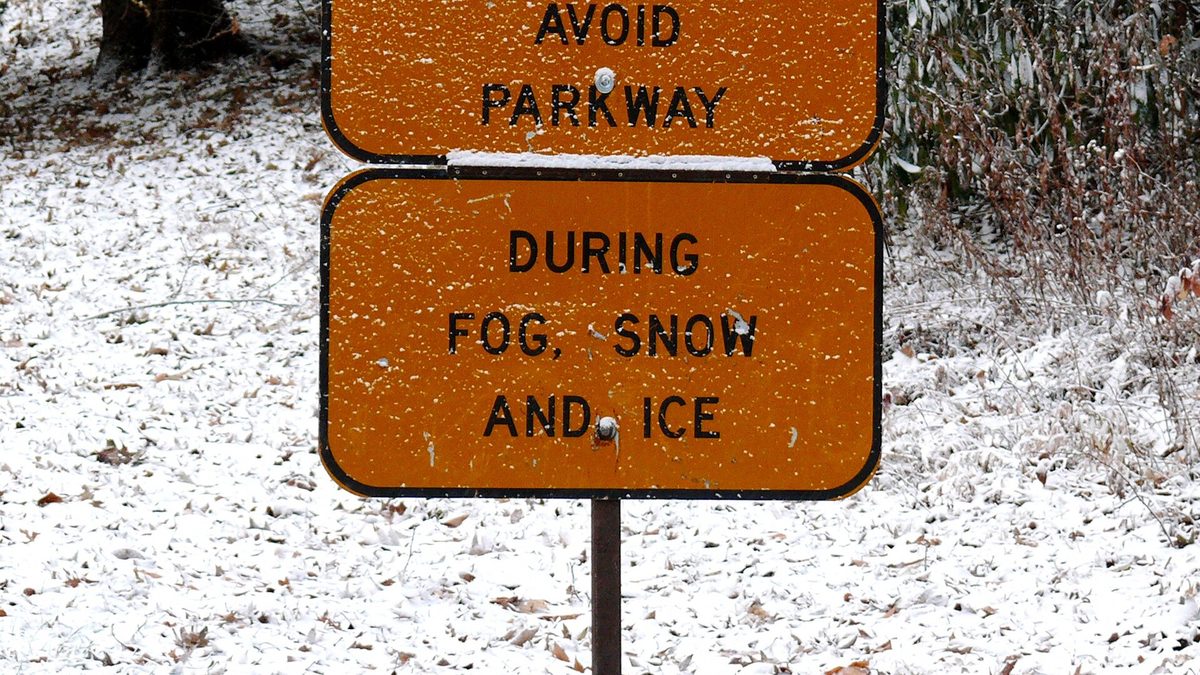
Go high, go in January or February, and check the roads before you commit. The Blue Ridge Parkway is the specific thing to check for this season.
- Large sections of the Parkway in North Carolina are still closed from Hurricane Helene. As of 8 August 2026 the National Park Service lists closures between mileposts 317.5 and 355.3, several marked "until further notice", with recreation of any kind prohibited in parts. Repairs have been running through 2026 and the Park Service has not published firm reopening dates. Check the NPS road closure map the week you travel rather than trusting a route planner.
- January and February are the peak. January is the snowiest month at every station in the state. February is close behind in the mountains and drops off sharply below 1,000 feet.
- Elevation beats timing. The gap between Boone and Charlotte in an average season is larger than the gap between a good and a bad winter at either one.
- Book refundable. Nothing useful about snow is knowable more than about a week out. Watch the National Weather Service forecast for the specific town, not a seasonal outlook.
- Take ice more seriously than snow. A storm arriving with marginal cold air produces freezing rain instead of snow, and a wetter than normal winter means more storms of every kind. Half an inch of ice takes down power lines and closes mountain roads for longer than a foot of snow does.
For the same treatment of the neighbouring states, see our guides to Tennessee snowfall and snow in Maryland.
Sources
- NOAA Climate Prediction Center, ENSO diagnostic discussion (13 August 2026) and seasonal outlook discussion (20 August 2026)
- Station snowfall records for Mount Mitchell, Banner Elk, Boone 1 SE, Asheville Regional, Greensboro, Charlotte Douglas, Raleigh-Durham and Wilmington, retrieved 8 August 2026 from the Regional Climate Centers ACIS data service. Seasonal totals and averages on this page were computed from those records
- NOAA 1991-2020 Climate Normals, seasonal snowfall
- North Carolina State Climate Office, "Winter Recap 2025-26: Cool and Dry, With a Snowy Centerpiece", March 2026
- North Carolina State Climate Office, "NC Extremes: Storm of the Century Smashed Snowfall Records"
- National Park Service, Blue Ridge Parkway road closures, checked 8 August 2026
- Farmers' Almanac 2026-2027 winter forecast, published August 2026, alongside its closure notice, still posted and last updated 27 July 2026. Both checked 26 August 2026
- Old Farmer's Almanac, long-range forecast for Charlotte, checked 26 August 2026
Snowfall figures are official station observations and climate normals as retrieved in August 2026. Conditions change: check the National Weather Service forecast for your destination before you travel.
Topics
Frequently asked questions
Advertisement