Does It Snow in Washington DC? What the Records Show

Does it snow in Washington DC? About 13.7 inches a year at Reagan National, mostly January and February. Month-by-month odds from NOAA records.
Advertisement
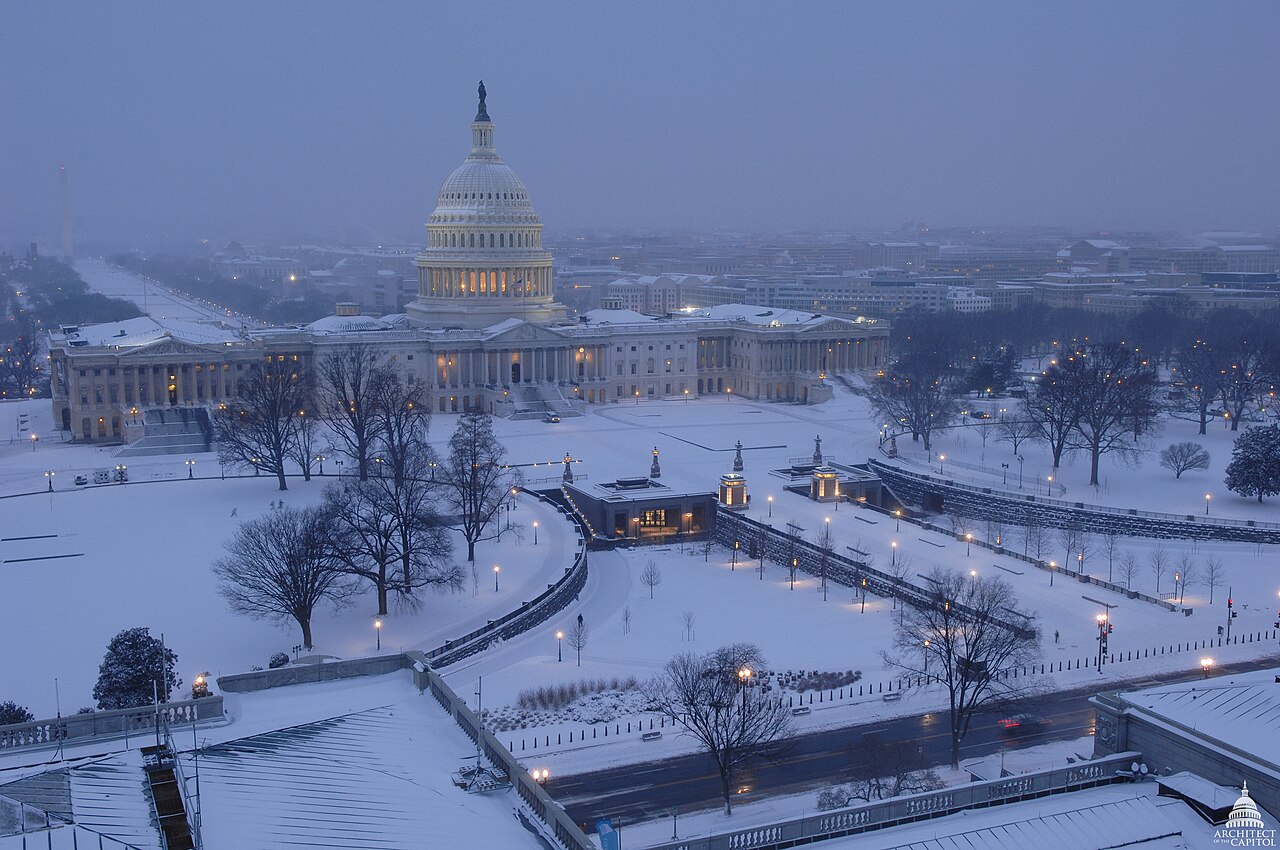
Yes, but less than most people expect. Washington DC averages about 13.7 inches of snow a winter, and last winter (2025-26) it got just 10.6. Nearly all of it falls in January and February, and one storm can supply most of a season.
A quick note on where this comes from. We have not spent a winter in DC, so this is a research-based guide built from NOAA's official records. The 13.7 is the reading at Reagan National Airport, the weather station closest to downtown. Data checked 9 November 2026.
How much snow does Washington DC get?
About 13.7 inches in a normal winter, going by NOAA's 1991-2020 normals. That is a few snowy days spread across the winter, not a season of snow. From 1991 to 2019 the airport averaged just under four days a winter with an inch or more. Last winter had two.
Almost every winter brings something: in 30 of the last 34, DC saw at least one day with an inch or more. But the total swings wildly. Here are the last five winters at Reagan National:
| Winter | Snow |
|---|---|
| 2021-22 | 13.2 in |
| 2022-23 | 0.4 in |
| 2023-24 | 8.0 in |
| 2024-25 | 14.9 in |
| 2025-26 | 10.6 in |
Go back further and the range is almost silly. The snowiest winter on record is 2009-10 at 56.1 inches. The least, 0.1 inch, happened twice, in 1972-73 and 1997-98.
Which months does it snow in DC?
January and February, by a wide margin. They average 4.9 and 5.0 inches and together bring about 72% of a typical winter's snow. March (2.0) and December (1.7) trail behind, and November barely registers. The last column is the one to read: it shows how often a month actually delivered an inch.
| Month | Average snow | Chance of at least 1 inch |
|---|---|---|
| November | 0.1 in | 3% |
| December | 1.7 in | 40% |
| January | 4.9 in | 83% |
| February | 5.0 in | 60% |
| March | 2.0 in | 37% |
Averages are NOAA's 1991-2020 normals. The chance column is our own count from NOAA's daily record: in how many of those 30 years the month brought at least an inch. January did it 25 times. December, which many guides call the start of snow season, managed it 12 times.
What about November and Christmas?
Both are long shots. Between 1991 and 2020, just 3 Novembers had any measurable snow, and only one had an inch. The one that people remember is 11 November 1987, when 11.5 inches fell in a day. That is the exception.
Advertisement
Christmas is only slightly better. Snow fell on Christmas Day itself in just 2 of the last 35 years, 1993 and 2002. If a white Christmas matters to you, our white Christmas odds guide shows how DC compares with the rest of the country.
Reagan, Dulles or BWI: which number is yours?
It depends where you will be. The 13.7 comes from Reagan National, a few miles from downtown, so it is the right number if you are staying near the monuments and museums. Dulles, out to the west, averages 21.0 inches. BWI, toward Baltimore, averages 19.3.
| Airport | Snow a year |
|---|---|
| Reagan National (DCA) | 13.7 in |
| Baltimore/Washington (BWI) | 19.3 in |
| Dulles (IAD) | 21.0 in |
That makes Dulles about 53% snowier than downtown. Online figures for "DC" run from 13.6 to 15.4 inches, and many pages do not say which station or years they used. We use one official set and tell you which.
One storm can make the whole winter
Last winter is the best example. A single storm on 25 January 2026 dropped 6.9 inches at Reagan National. That is about 65% of the winter's entire 10.6 inches. Take that one day out and the whole winter would have added up to 3.7 inches.
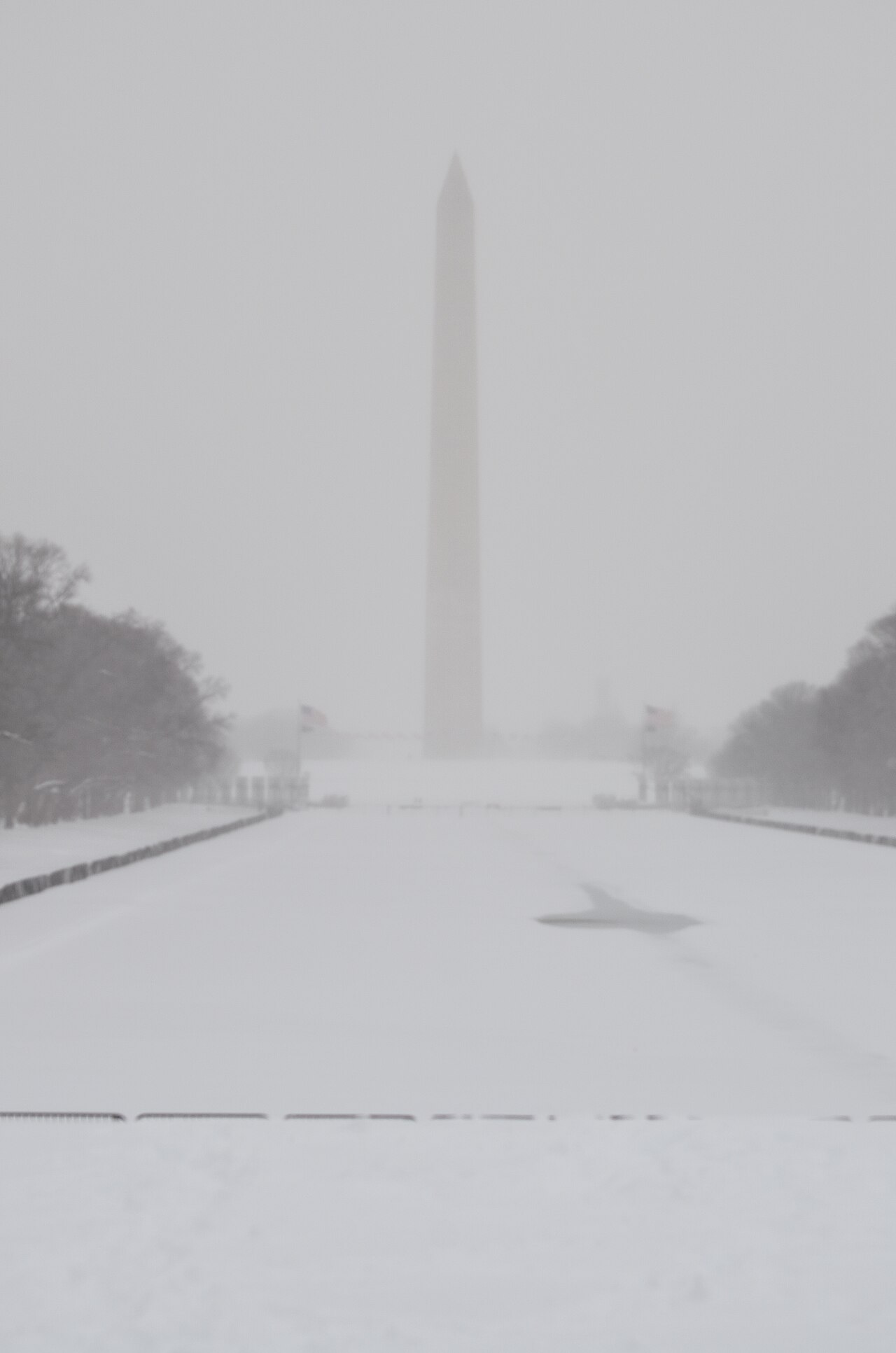
When DC does get a big one, it is a big one. The largest three-day totals in NOAA's record at the airport are 18.7 inches in February 1979, 17.8 inches in both January 2016 and February 2010, and 17.3 inches in January 1996. The 1922 Knickerbocker storm is widely reported at about 28 inches, but that predates NOAA's daily record and we could not find an official National Weather Service page for it, so read that figure as a historical report.
What happens if it snows during your trip?
Three things change quickly, and you can check each one before you leave your hotel.
- Federal offices. The government posts a daily operating status (open, delayed or closed) on OPM's website and in its OPM Alert app. It is a quick way to tell how disrupted the city is.
- Museums. Smithsonian museums have closed early, for a day, or for several days in past storms. In January 2016 they closed at noon and stayed shut through the weekend, and the National Zoo has closed separately. Check si.edu/visit the morning of your visit.
- Outdoor sights. Open-air National Park Service sites like the National Mall usually stay open to walk, while ranger programs and shops can close. Check nps.gov for notices.
Flying home on a snow day is a separate problem. Read our guide on what to do when a flight is cancelled due to snow before you head to the airport.
Should you plan a trip around DC snow?
No. If you want the best odds, go between mid January and mid February, when January delivered an inch in 25 of 30 years and February in 18. Even then an inch is likely and a real snow day is a coin flip.
Book refundable fares and hotels, and decide the week you travel. Nobody can give you a seasonal snow total in advance, and anyone who prints one is guessing. A winter like 2022-23, with 0.4 inches all season, is the risk if you book a non-refundable week for snow.
Advertisement
If you are visiting DC for the city itself, do not let snow decide the date. For the wider region, see our Maryland snow guide, Virginia snow guide and USA winter forecast guide.
How we got these numbers
We used NOAA's official 1991-2020 normals for Reagan National, Dulles and BWI, plus Reagan National's daily snowfall record back to 1941, downloaded on 9 November 2026. The winter totals, the chance column and the storm totals are our own sums from that record. As a check, our totals for 2009-10 (56.1 inches) and 1995-96 (46.0) match the National Weather Service's seasonal table.
We are travel writers, not meteorologists, so we stick to the record and say where it runs out. An airport reading is not your street, and snow at your hotel can differ. For a forecast on your actual dates, use the National Weather Service Sterling office at weather.gov/lwx. Spotted a mistake? Tell us through our contact page, and see our editorial policy for how we handle corrections.
Quick answers
What is the snowiest month in Washington DC?
February, by a hair: 5.0 inches on average against 4.9 for January. January is the safer bet, though. It brought at least an inch in 25 of the 30 years from 1991 to 2020, while February managed it in 18.
Does it snow in DC every year?
Nearly always. Every winter from 1991 to 2025 had some snow, and 30 of the 34 winters from 1991-92 to 2024-25 had at least one day with an inch or more. The amount is the unpredictable part: 2022-23 brought only 0.4 inches in total.
Will it snow in DC this winter?
Nobody can say yet. The last five winters ranged from 0.4 to 14.9 inches, which shows how far one season can swing from the next. Use the monthly chances above for planning, and check the National Weather Service forecast about a week before you travel.
Where these numbers come from
- NOAA NCEI, 1991-2020 monthly normals, Washington Reagan National Airport (USW00013743)
- NOAA NCEI, 1991-2020 monthly normals, Washington Dulles Airport (USW00093738)
- NOAA NCEI, 1991-2020 monthly normals, Baltimore/Washington International Airport (USW00093721)
- NOAA NCEI, daily summaries (SNOW), Washington Reagan National Airport, 1941 to 2026
- National Weather Service Sterling, Washington DC snowfall by season
- U.S. Office of Personnel Management, Washington DC area operating status
- Smithsonian Institution Archives, snowstorm closes SI, 22 January 2016
- WJLA, the Knickerbocker storm (1922)
- TripTravelingGuide, white Christmas odds 2026
Topics
Advertisement