USA Winter Forecast 2026-2027: NOAA vs the Almanacs, and What the Data Actually Says

NOAA, the Old Farmer's Almanac and the Farmers' Almanac have all weighed in on winter 2026-2027. Here is what each one actually says, and what has not published yet.
Advertisement
The winter forecast for 2026-2027 depends on which forecaster you ask, and on when you ask them. Two national sources have already published theirs, two more are not out until October, and NOAA's own data on the developing El Nino is the one thread running through all of them. We checked what has actually been published so far, rather than assume all five major US winter forecasts already exist.
On this page: the comparison table, what NOAA, the Old Farmer's Almanac, the Farmers' Almanac, AccuWeather and the Weather Channel each say, then a state-by-state jump list, and our own read at the end.
Jump to your state: Georgia · Virginia · Michigan · Colorado · Minnesota · Washington · Montana · Utah · Massachusetts · North Carolina · Texas · Ohio · Pennsylvania · Tennessee
What is the winter forecast for 2026-2027?
A strengthening El Nino, a milder lean for much of the country, and real disagreement on the details. NOAA's data puts this El Nino on track to be historically strong. The Old Farmer's Almanac and Farmers' Almanac, both already live, agree on a milder lean but differ on where the cold and snow land.
AccuWeather and NOAA's own branded Winter Outlook are not out yet. Both are typically released in October, so this page states plainly what is confirmed right now and will be updated once the remaining two forecasts publish.
Winter Forecast 2026-2027 Comparison: Every Source, Side by Side
Six sources, one table. Four national forecasters have real, dated 2026-2027 content live right now, one more publishes in October, and our own station-data read closes out the row instead of guessing at a number nobody can responsibly give this early.
| Source | Published | Headline call |
|---|---|---|
| NOAA (Climate Prediction Center) | 13 Aug 2026 (ENSO discussion, not the full Outlook) | Greater than 90% chance of a very strong El Nino |
| Old Farmer's Almanac | 31 Aug 2026 | Mostly mild, with colder and snowier pockets |
| Farmers' Almanac | Updated 3 Sep 2026 | A season of sharp regional contrasts |
| The Weather Channel | 19 and 29 Aug 2026 (analysis, not a branded outlook) | A super El Nino could flip typical winter temperature patterns |
| AccuWeather | Not yet, due October 2026 | Not available |
| Trip Traveling Guide (this page) | Ongoing, based on real NOAA station history | No number invented; below normal in the East, above normal in the interior Southwest historically |
What does NOAA say about winter 2026-2027?
NOAA's Climate Prediction Center put the Nino-3.4 index at plus 1.4 degrees in its ENSO diagnostic discussion, issued 13 August 2026, and gave a greater than 90 percent chance of a very strong El Nino this fall and winter, with a real possibility of a historic event.
NOAA's routine three-month outlook maps, last updated around 20 August 2026, lean warmer than normal across the northern tier and wetter than normal across the South and Southwest. NOAA's full, branded Winter Outlook, the seasonal product with a public press briefing, is not out yet and has historically arrived the third Thursday of October.
What does the Old Farmer's Almanac predict?
A mostly mild winter with real exceptions. The 2026-2027 forecast, updated 31 August 2026, is headlined "Mostly Mild Winter, Colder, Snowier Spots Ahead," and names a colder stretch running from central New England through the Appalachians and Ohio Valley, plus Hawaii.
Its wet and dry call favors the West and parts of the South, Midwest and Florida running wetter than normal, with extra snow flagged for parts of the Northeast, the Appalachians, the West and Alaska. Editor-in-chief Carol Connare put it plainly: winter will not look the same everywhere this year.
What does the Farmers' Almanac predict?
Sharp regional contrasts rather than one clean national story. Forecaster Caleb Weatherbee's 2026-2027 forecast, last updated 3 September 2026, calls for an active, wet storm track across the South alongside quick bursts of snow and cold farther north through the winter.
The Northeast gets the least certain call of any region: a particularly unpredictable mix of rain, sleet and snow rather than a clean lean in either direction. Like the Old Farmer's Almanac, it publishes no specific snowfall figure in inches for any city.
What does AccuWeather predict for winter 2026-2027?
Nothing yet, by AccuWeather's own account. Its winter-weather hub carries no 2026-2027 seasonal forecast as of this writing, and an AccuWeather article on the developing El Nino states directly that the company's own long-range winter forecast will not release until sometime in October 2026.
What it has published so far is analysis of the same El Nino data everyone else is watching, describing this year's event as a candidate for the strongest in AccuWeather's own record. This page will add AccuWeather's actual regional forecast once it exists rather than guess at it now.
What does the Weather Channel say about winter 2026-2027?
No branded seasonal outlook here, but real, dated analysis from a named meteorologist worth reading. Jonathan Erdman's 18 August 2026 piece lays out how a super El Nino could flip the usual winter temperature pattern across the country this coming season.
A follow-up on 29 August covers how the same El Nino could affect snowfall and ski conditions specifically. Both pieces read as journalism built on NOAA's own data rather than an independent seasonal outlook product, and we treat them that way here.
Farmers' Almanac vs NOAA: how do the two methods differ?
NOAA builds its outlook from ENSO indices, ocean temperature data and statistical and dynamical climate models, all published and checkable. Both almanacs use proprietary formulas their publishers have never fully disclosed, reportedly built from some mix of sunspot activity, planetary position and historical weather patterns.
Neither approach is inherently wrong, but only one of them can be independently audited. That is a real, structural difference worth knowing before treating either source's specific regional call as equally verifiable.
How accurate has the Farmers' Almanac been?
Mixed, and noticeably better in some seasons than others. We ran a full station-by-station accuracy check against its own past regional calls, comparing what it predicted each year to what NOAA's own station data actually recorded across a run of recent winters.
That investigation found real seasons where the almanac's regional call landed close to the outcome, and others where it missed by a wide margin, roughly in line with what a pattern-based method without disclosed methodology would be expected to produce. Read it before treating any single regional call as reliable on its own.
Why do winter forecasts disagree with each other?
Because a seasonal outlook is a shift in the odds, not a promise, and different methods shift those odds differently. NOAA's El Nino data supports a milder, wetter South and a colder pocket in parts of the Northeast, and both almanacs land somewhere inside that same broad range without matching on the specifics.
Disagreement between sources is not evidence that one of them is wrong. It is what happens when several different methods all try to compress a full season into a handful of regional calls made months in advance.
State-by-state: what NOAA, the almanacs and local experts are saying
National forecasts only go so far, so we pulled the real, dated 2026-2027 commentary for 14 of the most-searched states individually. Some states split across more than one forecast region, which is itself worth knowing before trusting a single statewide call.
Georgia winter forecast 2026-2027
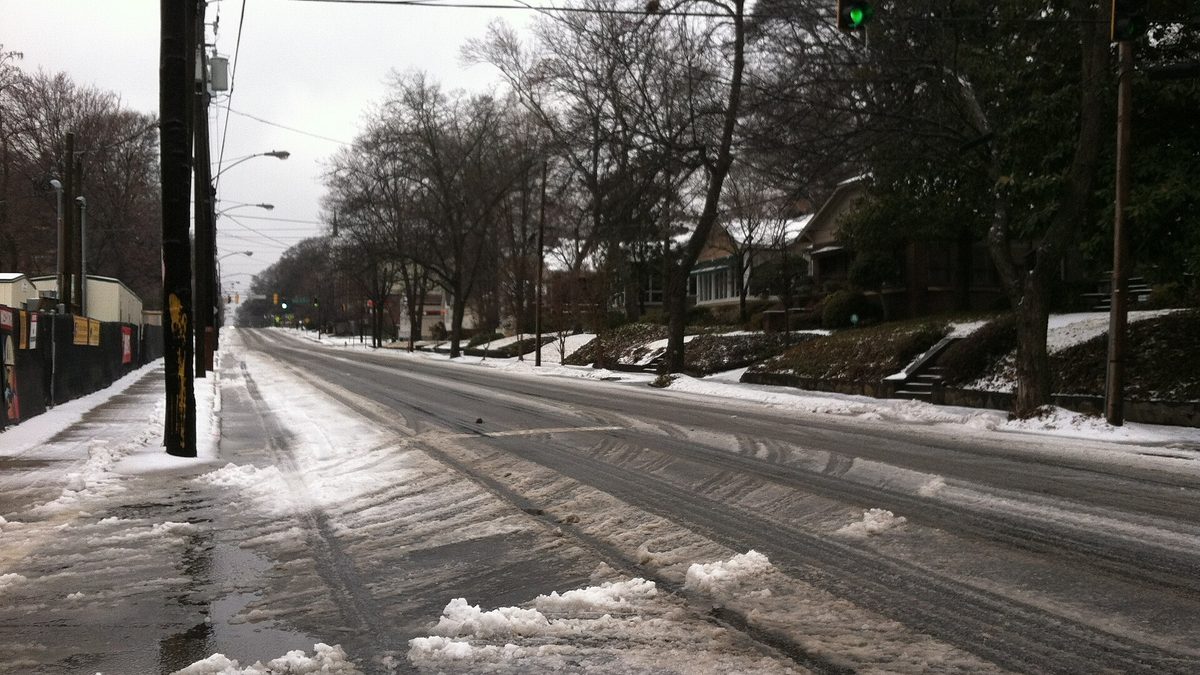
A wetter lean, with real snow risk concentrated in the north. NOAA-linked local coverage points to more snow events than usual for North Georgia, both almanacs call the state's precipitation above normal, and only the Old Farmer's Almanac gives snowfall a "normal" rather than below-normal label.
- NOAA (via Atlanta News First, 27 Aug 2026): a very strong El Nino should bring a wetter-than-average winter, with North Georgia potentially seeing eight or more separate snow events and a higher ice-storm risk flagged as the most dangerous part of the outlook.
- Old Farmer's Almanac: Georgia falls in its Southeast region: above-normal temperatures, precipitation above normal in the north and below in the south, snowfall near normal, snowiest in early January and late February for the north of the state.
- Farmers' Almanac: grouped in Zone 3 with the rest of the Southeast: near-normal to slightly below-normal temperatures, above-normal precipitation with more storms, and low snow risk outside of possible ice in the Appalachian foothills.
- Trip Traveling Guide: the Atlanta News First reporting carries the most weight here, since it cites a specific event count for North Georgia rather than a vague regional lean. Expect more rain than snow across the state, with the real risk concentrated in the north and ice, not powder, the bigger travel hazard.
For the historical NOAA station record behind Georgia's snow, see our full Georgia snow predictions guide.
Virginia winter forecast 2026-2027
Three different climates in one state, and the forecasts actually reflect that. Richmond leans milder, Hampton Roads matches Georgia's call, and the western mountains get the opposite forecast entirely: colder with more snow, not less, the reverse of the rest of the state.
- NOAA (via NBC12 Richmond, 19 Aug 2026): above-average precipitation expected, especially along the coast, with mild spring-like stretches interrupted by brief intense cold snaps. Snow is called a "double-edged sword," since El Nino storms often run too warm, though one high-impact Nor'easter remains possible.
- Old Farmer's Almanac: splits the state three ways. Richmond and central-northern Virginia fall in the Atlantic Corridor (milder, above-normal temperatures, slightly below-normal snow). Hampton Roads falls in the Southeast region. Roanoke and the western mountains fall in the Appalachians, forecast colder with above-normal snowfall, especially in the north.
- Farmers' Almanac: groups all of Virginia in Zone 3 with the Southeast, the same near-normal-temperature, above-normal-precipitation, low-snow-risk call as Georgia.
- Trip Traveling Guide: the Old Farmer's Almanac's three-way regional split is the most useful guide here, since it actually reflects Virginia's real geography instead of one statewide number. Where you are in Virginia matters more than any single source's headline call.
Full historical data for the region is in our statewide USA snow dataset, covered later on this page.
Advertisement
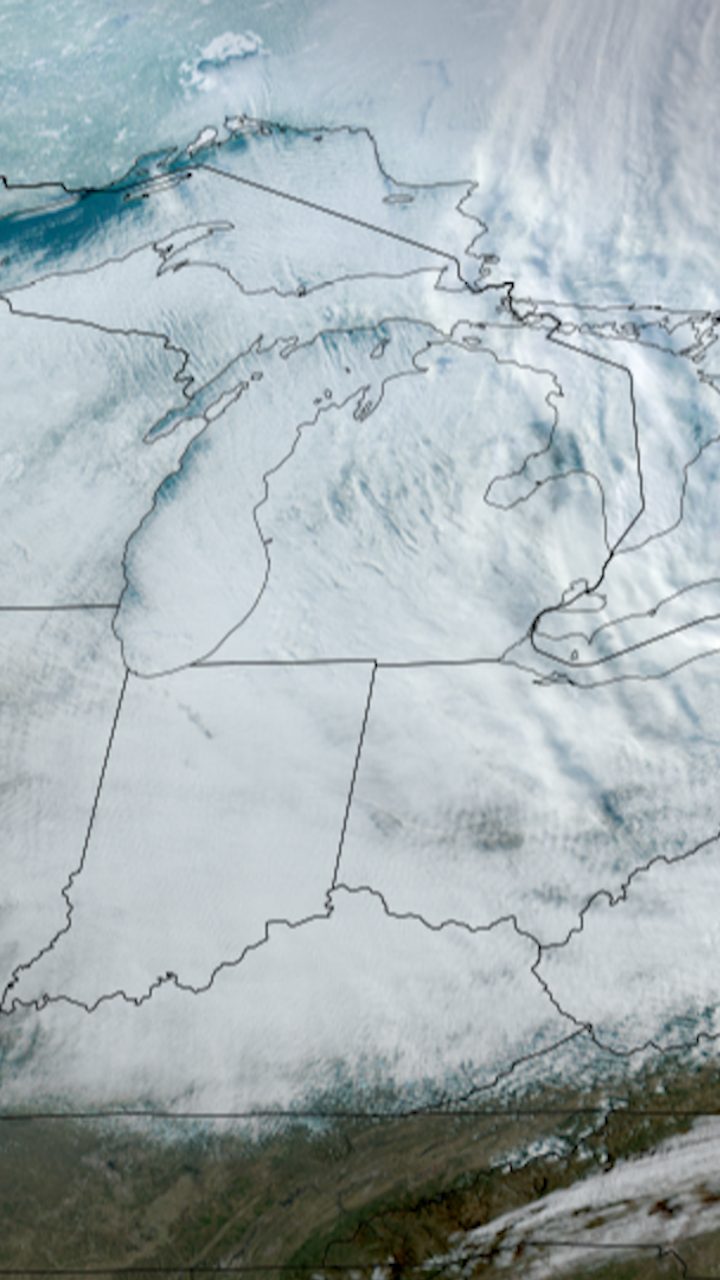
Michigan winter forecast 2026-2027
A milder, wetter winter with a real chance of less snow than usual, at least in the Lower Peninsula. A West Michigan meteorologist who tracks this closely says most strong El Nino years have historically brought below-average snowfall to the region, though never as a guarantee.
- NOAA (via WOOD TV8 chief meteorologist Ellen Bacca, 3 Aug 2026): this very strong El Nino is likely to have a big impact on West Michigan's winter; most strong El Nino years have produced less-than-average snowfall here historically, though that is not a guaranteed correlation.
- Old Farmer's Almanac: the Lower Peninsula falls in its Lower Lakes region: above-normal temperatures and precipitation but near-to-below-normal snowfall, with a "classic winter January." The Upper Peninsula falls in the Upper Midwest region instead, milder at first before turning colder as winter continues.
- Farmers' Almanac: groups Michigan in Zone 2 with the Great Lakes, Ohio Valley and Midwest: cold snaps mixed with warmer stretches, near-normal precipitation, and lake-effect snowbelt areas running above average while interior areas stay closer to normal.
- Trip Traveling Guide: Ellen Bacca's read carries real weight, since it is grounded in West Michigan's own El Nino history, not a generic regional zone. Expect a milder winter with a real chance snowfall lands below average, especially away from the lake-effect belt.
See our full Chicago winter guide for the same Great Lakes pattern at a neighboring station.
Colorado winter forecast 2026-2027
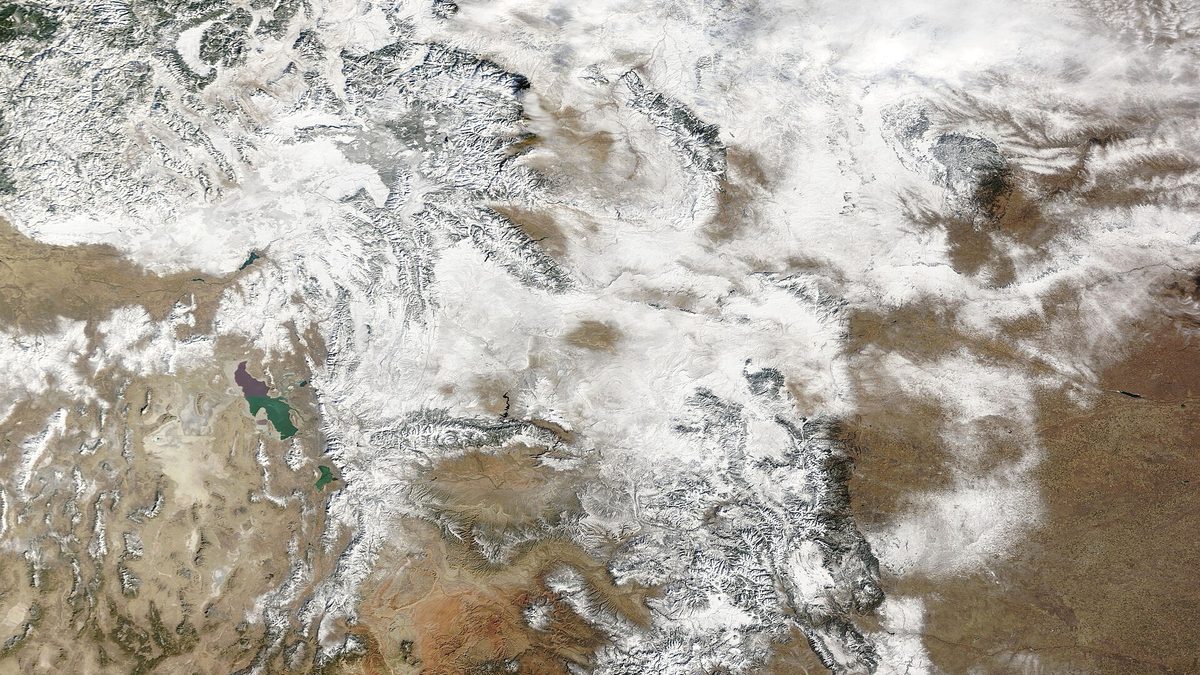
Genuinely uncertain, according to the people who track it for a living. Colorado's own assistant state climatologist is on record cautioning against assuming a big snow year just because El Nino is strong, and the state splits into two opposing forecast calls depending on which side of the Rockies you mean.
- NOAA (via Colorado Sun/HPPR, 31 Aug 2026): assistant state climatologist Peter Goble says people get "really excited" about a big snow year from El Nino alone, but "we definitely don't have enough information to say that," calling this year's signal genuinely unclear so far. NWS Grand Junction hydrologist Erin Walter notes how heavily the state's agriculture and recreation sectors lean on the outcome.
- Old Farmer's Almanac: also splits the state. The Front Range and High Plains (Denver, Colorado Springs) get a warmer, drier, below-normal-snowfall call. The western slope (Grand Junction) falls in the Intermountain region instead, with the opposite call: warmer, wetter, above-normal snow.
- Farmers' Almanac: groups Colorado in Zone 4 with the North Central states: cold snaps despite the wider El Nino warming tendency, near-normal precipitation, and a snow risk it calls "variable" specifically for the Rockies.
- Trip Traveling Guide: Peter Goble's own caution is the most credible read precisely because it refuses to overclaim. Treat the Front Range and the western slope as two different forecasts, not one, and do not book a ski trip on El Nino alone.
Our full Colorado snow guide, linked later on this page, covers Denver's station history in detail.
Minnesota winter forecast 2026-2027
Milder and drier than normal on average, backed by real numbers rather than a qualitative guess. Minnesota Public Radio's own analysis of every El Nino winter since 1950 found the state runs measurably warmer and less snowy in these years, while cautioning that averages still hide real exceptions.
- NOAA (via MPR News, 17 Aug 2026): El Nino winters since 1950 have averaged 2.4 degrees warmer statewide than non-El Nino winters, with Twin Cities snowfall running about 24 percent lower on average. The piece is explicit that these are probability shifts, not guarantees, citing the 1991 Halloween Blizzard as a major storm that still hit during a warm-leaning winter.
- Old Farmer's Almanac: Minnesota falls in its Upper Midwest region: milder months expected to turn colder as winter continues, with near-to-below-normal snowfall but still real chances for snow events into the new year.
- Farmers' Almanac: groups Minnesota in Zone 4 with the North Central states: cold snaps despite the wider warming tendency, near-normal precipitation, with some drought concern flagged for the northern Plains.
- Trip Traveling Guide: MPR's own numbers are the strongest source here, since they come from 76 years of real Minnesota winters rather than a forecast. Milder and less snowy is the historical pattern, though the 1991 Halloween Blizzard is a real reminder that averages hide real exceptions.
Washington winter forecast 2026-2027
Warmer and drier, the least snow-friendly combination on this list, and a pattern that would extend an already multi-year streak. A veteran Seattle-area meteorologist expects the state's mountain snowpack to come in below average for a fifth consecutive year if this holds.
- NOAA (via KIRO Newsradio meteorologist Ted Buehner, 24 Aug 2026): greater than 90 percent chance of a very strong El Nino, with a near 70 percent chance of a record event; the Pacific storm track is expected to shift south, bringing warmer temperatures with no clear precipitation trend, and Buehner expects a fifth consecutive below-average mountain snowpack year.
- Old Farmer's Almanac: western Washington falls in its Pacific Northwest region: above-normal temperatures and, in the almanac's own words, "to no one's surprise," a wet winter with above-normal snowfall. Eastern Washington falls in the Intermountain region instead, also warmer and wetter with above-normal snow.
- Farmers' Almanac: groups Washington in Zone 6 with the Northwest: near-normal temperatures, an active storm pattern, and mountain snowpack it expects below normal specifically in the Cascades.
- Trip Traveling Guide: Ted Buehner's read is the one to trust, since he ties this year's call to a real, measured streak, four straight below-average snowpack years, rather than treating this winter in isolation. A fifth is the more likely outcome than a rebound.
Montana winter forecast 2026-2027
Split down the middle of the state, and already complicated by an existing drought. Montana's own state climatologist points out that 86 percent of the state was already in drought before winter even began, with El Nino's usual effects strongest west of the Continental Divide and far weaker east of it.
- NOAA (via Montana State Climatologist Kelsey Jencso, Jul-Aug 2026 columns): historically, El Nino winters run warmer and drier across western Montana, particularly west of the Continental Divide, with impacts east of the Divide "generally weaker and more variable." A stronger El Nino raises the odds of this pattern "but does not guarantee" it, and "no two El Ninos produce identical outcomes."
- Old Farmer's Almanac: also splits the state. Eastern Montana falls in the High Plains region (warmer, drier, below-normal snow). Western and central Montana, including Missoula and Helena, fall in the Intermountain region instead, with a warmer, wetter, above-normal-snow call.
- Farmers' Almanac: groups Montana in Zone 4 with the North Central states, the same cold-snaps-despite-warming, near-normal-precipitation, variable-Rockies-snow call given to Colorado and Minnesota.
- Trip Traveling Guide: Kelsey Jencso's own column is the most authoritative source on this whole page, since he is the state's official climatologist. West of the Divide leans warmer and drier; east of it is genuinely too variable to call, and the existing drought only adds to that uncertainty.
Utah winter forecast 2026-2027
Genuinely split between north and south, and NOAA's own meteorologist calls Utah the hardest state on the map to forecast this far out. Every source that weighed in independently landed on the same north-south divide, which is rare agreement for a seasonal outlook.
- NOAA (via CPC meteorologist Scott Handel, 4 Sep 2026): southern Utah is "favoring above-normal precipitation," while the Great Basin and northern Utah remain "more of a toss-up."
- Old Farmer's Almanac: Utah falls in its Intermountain region: warmer, wetter, and above-normal snowfall.
- Farmers' Almanac: groups Utah in a four-state Southwest zone with California, Nevada and Arizona: near-normal temperatures and low snow risk at lower elevations, the least Utah-specific of the sources here.
- Trip Traveling Guide: Scott Handel's read is the one to build travel plans around, since it is the only source that actually splits the state instead of giving one number. Bet on southern Utah, treat northern Utah as a real coin flip.
Our dedicated Utah snow predictions guide covers 141 years of Salt Lake City and Alta station data, plus a real quote from Ski Utah's own season preview.
Massachusetts winter forecast 2026-2027
Three competing forecasts and a Boston meteorologist willing to say which one he trusts least. NOAA calls for a warmer, wetter winter; the Old Farmer's Almanac splits the state; and the Farmers' Almanac expects more coastal storms mixing snow with rain.
- NOAA (via the Boston Globe, 5 Sep 2026): warmer-than-average temperatures and more precipitation than normal, since "El Nino impacts are likely going to take over the weather across the country this winter."
- Old Farmer's Almanac: Boston and most of the state fall in its Atlantic Corridor region (milder, above-normal temperatures, slightly below-normal snow). Far western Massachusetts falls in the Northeast region instead, with the opposite call: colder, above-normal snowfall.
- Farmers' Almanac: groups Massachusetts in Zone 1 with the rest of the Northeast and New England: variable temperatures with cold snaps and mild stretches, near-normal precipitation, moderate but not persistent snow risk.
- Trip Traveling Guide: the Globe's own synthesis, the rain-snow line shifting inland, is the most useful single answer, since it explains why NOAA, the almanacs and plain experience can all sound different while describing the same winter.
The Globe's own meteorologist reads the real signal as the rain-snow line shifting inland: less snow for coastal Boston, closer-to-normal totals in the higher interior elevations, a nuance our New York winter guide covers in more depth for the neighboring coastal Northeast.
North Carolina winter forecast 2026-2027
Wetter is the one thing every source agrees on, though how much of that lands as snow depends on which part of the state you mean. A NOAA meteorologist put the state's El Nino signal in plain terms: more rain is likely, and that raises the odds of winter weather too.
Advertisement
- NOAA (via WRAL, 14 Aug 2026): CPC meteorologist Lindsey Long said "in North Carolina during an El Nino, we tend to see wetter weather," and "the odds are higher for winter weather, just because of increased chances for precipitation."
- Old Farmer's Almanac: splits the state. The Piedmont and coast fall in the Southeast region: above-normal temperatures, near-normal snowfall. The western mountains around Asheville fall in the Appalachians instead, with the opposite call: below-normal temperatures and above-normal snowfall.
- Farmers' Almanac: groups North Carolina in Zone 3 with the Southeast: near-normal to slightly below-normal temperatures, above-normal precipitation, low snow risk outside possible Appalachian ice.
- Trip Traveling Guide: the NOAA meteorologist's quote carries the most weight here, since it is specific to North Carolina rather than a multi-state zone. Wetter is the safer bet than snowier statewide, and the almanacs' Piedmont-mild, mountains-colder split is worth following if you are headed to the west of the state.
Texas winter forecast 2026-2027
A federal meteorologist's honest answer: it is genuinely too early to say much with confidence. North Texas leans wetter and possibly cooler, but the National Weather Service itself is cautious about reading too much into El Nino alone this far from winter.
- NOAA (via Dallas Morning News, 19 Aug 2026): NWS Fort Worth meteorologist-in-charge Tom Bradshaw said "it's still too early to tell exactly what weather conditions North Texas may see this winter," expecting a "wetter than normal" season with possibly cooler averages, but cautioned "the El Nino pattern is not the only game in town in the atmosphere."
- Old Farmer's Almanac: Texas spans three regions. Houston and Dallas fall in Texas-Oklahoma (warmer, drier, near-normal snow with a chance in the new year). El Paso falls in the Desert Southwest (mild, drier, below-normal snow). The Panhandle falls in the High Plains (warmer, drier, below-normal snow).
- Farmers' Almanac: groups Texas in Zone 5 with the South Central states: near-normal to slightly below temperatures, above-normal precipitation with flooding risk, and low snow risk except possible ice in Oklahoma and northern Texas.
- Trip Traveling Guide: Tom Bradshaw's caution is the most honest answer on this whole page, and worth taking seriously precisely because it is a federal meteorologist declining to overpromise. Wetter is reasonable to expect; snow in Texas is always a coin flip on one storm's timing, not a season.
Ohio winter forecast 2026-2027
Warmer with less snow than usual, according to the forecasts published so far, extending a pattern that has shown up across the wider Great Lakes region this season. No Ohio-specific meteorologist has gone on record yet, so this call rests more heavily on regional forecasts than a local one.
- NOAA-adjacent (via a Cincinnati Enquirer roundup, 20 Aug 2026): a long-range outlook from forecasting service OpenSnow favors above-average temperatures across Ohio and the northern US generally, with below-normal snowfall projected for the Great Lakes region. No individual Ohio meteorologist is quoted by name in this piece, worth noting since most of our other state sections have one.
- Old Farmer's Almanac: splits the state. Interior Ohio (Columbus, Cincinnati) falls in the Ohio Valley region: colder, wetter in the east, several snowy periods. Cleveland and Toledo fall in the Lower Lakes region instead, warmer with near-to-below-normal snow.
- Farmers' Almanac: groups Ohio in Zone 2 with the Great Lakes and Midwest: cold snaps mixed with warmer stretches, near-normal precipitation, lake-effect snowbelt areas above average.
- Trip Traveling Guide: the honest answer is that Ohio does not have a strong named local voice yet this season, so we would lean on the fact that all three sources here agree on a milder, less snowy direction rather than picking a favorite among them.
Pennsylvania winter forecast 2026-2027
Warmer and drier than last winter, according to the one named local source we found, though it predates most of this page's other citations by a couple of months. Pennsylvania also splits across four separate forecast regions, more than any other state on this list.
- NOAA (via Pittsburgh Post-Gazette, 22 Jun 2026): NWS Pittsburgh-area hydrologist Alicia Miller said "El Nino could mean that this winter will be warmer and drier with less snow," a real change from a snowier, colder previous winter. This citation is older than most others here, from June rather than August or September.
- Old Farmer's Almanac: splits the state four ways. Philadelphia falls in the Atlantic Corridor (milder, slightly below-normal snow). Scranton and Allentown fall in the Appalachians (colder, above-normal snow). Pittsburgh falls in the Ohio Valley (colder, several snowy periods). Erie falls in the Lower Lakes (warmer, near-to-below-normal snow).
- Farmers' Almanac: groups Pennsylvania in Zone 1 with the Northeast and New England: variable temperatures, near-normal precipitation, moderate but not persistent snow risk.
- Trip Traveling Guide: the Old Farmer's Almanac's four-way split is the more useful guide here than any single city's forecast, since Philadelphia, Pittsburgh, Scranton and Erie genuinely see different winters. Check the region closest to your actual destination, not the statewide headline.
Tennessee winter forecast 2026-2027
Drier than normal in Middle Tennessee, according to the state's own National Weather Service office, with a track record behind that call: Nashville finished below normal snowfall in four of the last six strong El Nino winters. This citation also predates most others here, from May rather than late summer.
- NOAA (via WKRN Nashville, 20 May 2026): Nashville NWS meteorologist Krissy Hurley said a moderate to strong El Nino is expected, and that Middle Tennessee "typically" sees drier-than-normal conditions in these winters, with Nashville landing below normal snowfall in four of the last six comparable seasons.
- Old Farmer's Almanac: Tennessee is the one state on this list that does not split regions: the whole state, mountains included, falls in the Deep South region, warmer than normal with below-normal snowfall and only a few northern snow chances.
- Farmers' Almanac: groups Tennessee in Zone 3 with the Southeast: near-normal to slightly below temperatures, above-normal precipitation, low snow risk outside possible Appalachian ice.
- Trip Traveling Guide: Krissy Hurley's read is the strongest here, since it is backed by a real six-winter track record at the same station rather than a one-off forecast. Below-normal snow in Middle Tennessee is the safer bet than an average or snowy season.
What does Trip Traveling Guide's own data say?
We do not publish our own seasonal snowfall number, because no method, ours included, can responsibly predict one this far out. What we can show is the historical pattern: strong El Nino winters checked station by station have consistently landed below normal in the East and Midwest, above normal in the interior Southwest.
Chicago, New York and Pittsburgh all finished strong El Nino winters at roughly 40 to 70 percent of their own normal snowfall, while Colorado's Denver station ran above normal in the same winters. That regional split, not a single national number, is what 76 years of NOAA data actually supports.
What should you check closer to your travel date?
The National Weather Service forecast for your specific city, inside the seven-day window NOAA itself says is reliable for actual snowfall. A seasonal outlook, from any of the five sources here, is built for planning a season, not one weekend.
The limits of this comparison
Two of the five national forecasters checked here, AccuWeather and NOAA's own branded Winter Outlook, have not published yet as of this writing, and we have said so directly rather than fill the gap with a guess. We will update this page once both are out.
Neither almanac discloses its full methodology, so their accuracy cannot be audited the way NOAA's published models can, and no source here, including us, can tell you whether it will snow on one specific date. This page describes what each forecaster has actually said, not what any of them promises.
Quick answers about winter 2026-2027
Short, direct answers to the questions readers ask us most often about this coming season, each one traceable back to a real, dated source described in more detail elsewhere on this page, rather than a guess offered without anything solid behind it.
Will it snow a lot in the US this winter?
Less than normal across most of the East and Midwest, more than normal in the interior Southwest, based on how strong El Nino winters have actually played out at real NOAA stations. No source, including this one, can responsibly give a single national number for total snowfall.
What is a super El Nino?
An El Nino event strong enough to rival or exceed the biggest on record since 1950, roughly a Nino-3.4 anomaly above plus 2.5 degrees. NOAA's own 13 August 2026 data puts a 69 percent chance on this winter reaching that threshold in the October-December window.
Is NOAA or the Farmers' Almanac more accurate?
NOAA's model-based outlook is the only one of the two that can be independently checked against its own published data. The Farmers' Almanac's formula has never been fully disclosed, so its accuracy can only be judged after the fact, which our own accuracy check does using real station numbers.
When does AccuWeather release its winter forecast?
Typically in October, and AccuWeather's own reporting on this year's El Nino confirms the 2026-2027 winter forecast has not published yet as of this writing. This page will add AccuWeather's actual call for each state once it is real and dated, not before.
Does El Nino mean a milder winter?
Usually warmer across the northern tier and wetter across the South, but not everywhere and not every year. Strong El Nino winters have still produced real cold snaps and major storms, so a milder lean nationally is not a promise for any single week or city.
Sources
- NOAA Climate Prediction Center, ENSO Diagnostic Discussion, 13 August 2026.
- The Old Farmer's Almanac, 2026-2027 winter forecast, updated 31 August 2026.
- Farmers' Almanac, 2026-2027 winter weather forecast, updated 3 September 2026.
- The Weather Channel, "Super El Nino could flip winter temperatures upside down in the US", 18 August 2026.
- National Weather Service, for local forecasts closer to any actual travel date.
This page will be updated once AccuWeather and NOAA's full Winter Outlook publish, both expected in October 2026. In the meantime, our station-by-station guides for New York and the rest of the 36-city USA winter dataset cover what actually happened in comparable El Nino winters, city by city.
Topics
Advertisement