Does It Snow in New York? The Real Numbers

Does it snow in New York? Central Park averages 29.8 inches a year, 63% of it in January and February. Month-by-month odds from NWS and NOAA data.
Advertisement
Yes, it snows in New York City, but only about 29.8 inches a year in Central Park, and 63% of it lands in two months, January and February. Everything else, including Thanksgiving and most of Christmas week, is a long shot.
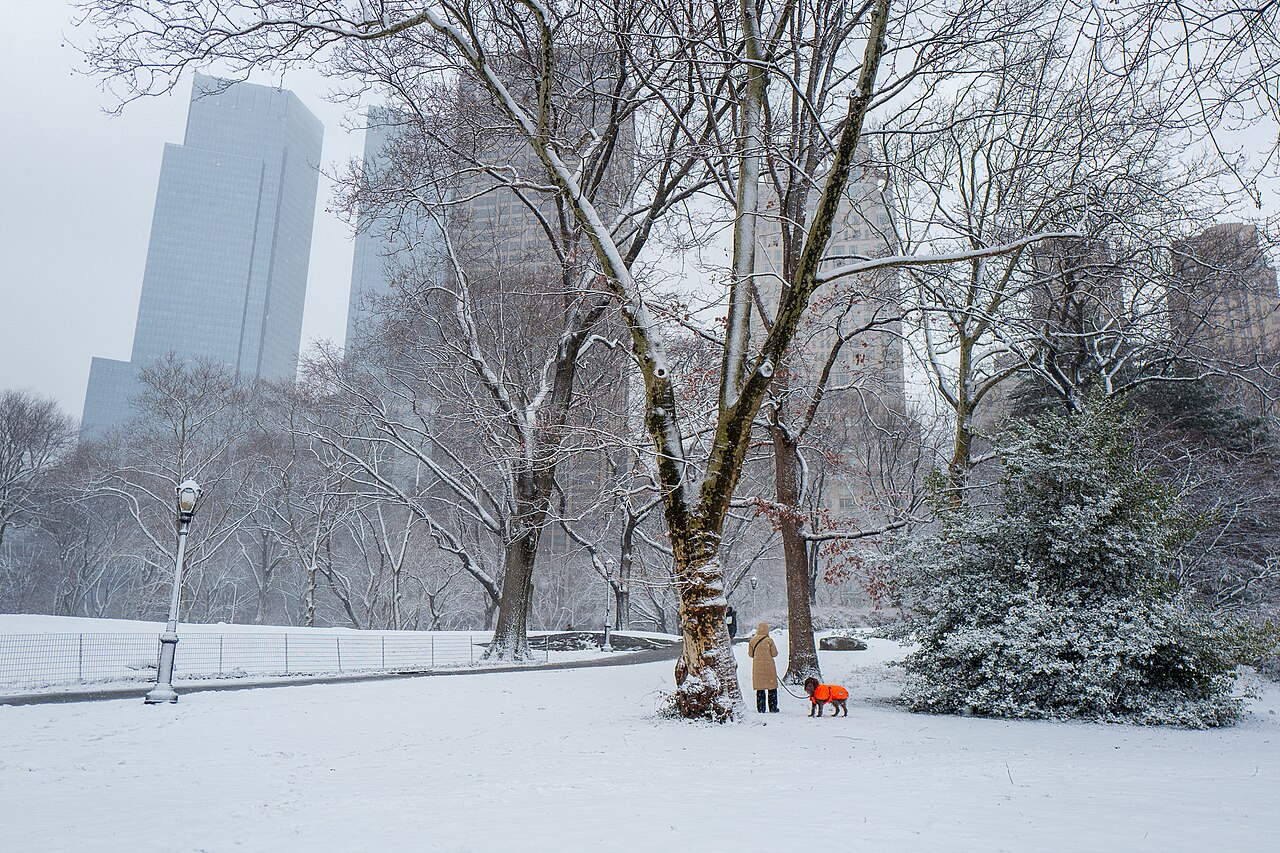
Central Park as the 22 February 2026 blizzard began. Photo: Colleen Sturtevant, CC BY-SA 4.0.
This is a research-based guide built from National Weather Service and NOAA records, with data checked in November 2026. We have not spent a winter in New York City, so every number below comes from a cited source, not from memory.
Does it snow in New York?
Yes. Central Park averages 29.8 inches of snow a year, based on NOAA's 1991-2020 normals. Almost all of it arrives between December and March. January and February alone deliver 63% of the season. Measurable snow has fallen as early as 15 October (1876) and as late as 29 April (1874).
The average hides a huge swing. The lowest season on record is 2.8 inches (1972-73) and the highest is 75.6 inches (1995-96), according to the National Weather Service's all-time extremes table for Central Park, updated 1 January 2026.
The last three winters show it. Central Park went 701 days without a single day of 1 inch or more, a record, until 1.4 inches fell on 16 January 2024. Then winter 2025-26 delivered 43.4 inches, 13.6 above normal and the coldest, snowiest winter in 11 years, per CBS New York. Its 22 February blizzard dropped 19.7 inches, the ninth biggest storm since records began in 1869.
Same city. Two winters apart.
Which months does it snow in New York City?
Snow in New York City is a December to March event. February is the snowiest month at 10.1 inches on average, followed by January at 8.8. November and April are token months, and October is almost always zero. The table shows each month's average and its share of the whole season.
Month | Average snowfall | Share of the season | What it means for a trip |
|---|---|---|---|
October | 0.1 in | 0.3% | Snow is a freak event |
November | 0.5 in | 1.7% | Rain is far likelier |
December | 4.9 in | 16.4% | First real chances |
January | 8.8 in | 29.5% | Best odds begin |
February | 10.1 in | 33.9% | Best odds of the year |
March | 5.0 in | 16.8% | Tapering off, late storms possible |
April | 0.4 in | 1.3% | Rare |
Season | 29.8 in | 100% |
Monthly averages are the NOAA 1991-2020 normals for Central Park as published by Current Results. The share column is our own calculation, each month divided by the 29.8-inch annual total. Pages we checked in November 2026 quote December anywhere from about 4 to 7.5 inches without naming a period, so we stick to one official set of normals.
Advertisement
Does it snow in New York around Thanksgiving?
Almost never. The historical odds of a white Thanksgiving in New York City sit near 3.5%, against 31.6% in Buffalo and 38.6% in Syracuse. November's 0.5-inch average is why: it is under 2% of the season. Pack for cold rain, not snow.
Those odds come from the dataset in our white Thanksgiving odds guide, and they are a long-run record, not a forecast for this year.
If your trip is the week of Thanksgiving, treat snow as a bonus you did not pay for.
Does it snow in New York in December and at Christmas?
Sometimes, but a white Christmas is a long shot. December averages 4.9 inches, about one-sixth of the season. The odds of at least 1 inch on the ground on 25 December run near 13% for the city, against 55.9% for New York State as a whole, because upstate drags the state number up.
The city figure comes from our white Christmas odds guide. Most travel pages sell December as the snowy month. The record says December is when snow becomes possible, and January and February are when it becomes likely.
When is the best time to see snow in New York City?
Late January through mid February. Those two months average 8.8 and 10.1 inches, and together they hold 63% of the season, more than the other five snow months combined. If snow is the reason for the trip, aim for that window and skip Christmas week.
Our recommendation: book a refundable fare and hotel for the second half of January or the first half of February, and decide on the week of travel. No month is a guarantee. February 2010 is the snowiest month on record at 36.9 inches, and plenty of Februaries have delivered a fraction of that.
Does snow stick in New York City, or just melt?
Snow sticks to grass, trees and rooftops first, and to pavement last. In the photo below, taken as the 22 February 2026 blizzard began, snow already coats the branches and the lawn while the road is still wet. A real accumulation needs a storm heavy enough to overwhelm that.
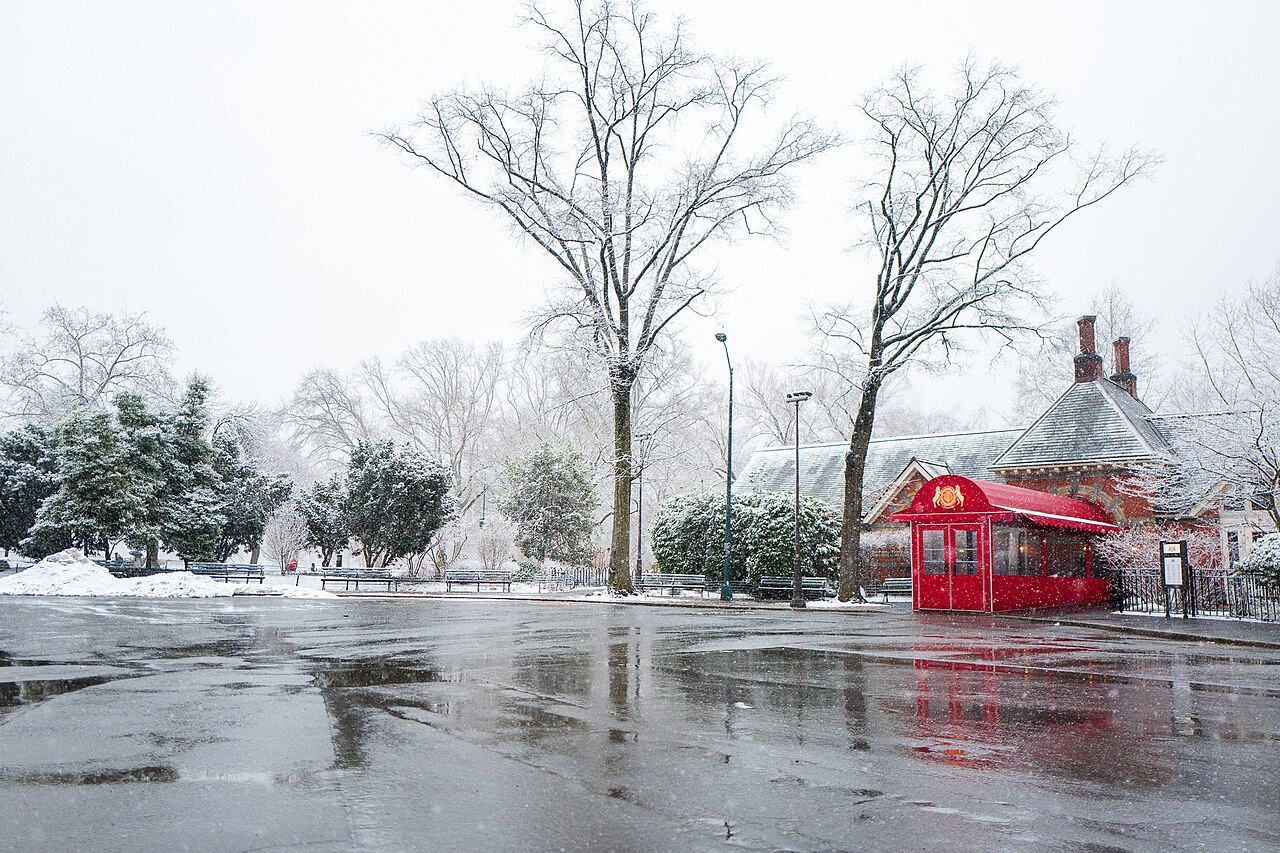
Snow in the air, a wet road underneath, near Tavern on the Green at the start of the 22 February 2026 storm. Photo: Colleen Sturtevant, CC BY-SA 4.0.
A storm of that size is a travel story before it is a sightseeing one. If your flight home falls on a big snow day, read our guide to what to do when a flight is cancelled due to snow before you get to the airport.
Is it different in upstate New York?
Yes, dramatically. "New York" means two climates. The city sits near the coast and gets 29.8 inches a year. Buffalo and the Great Lakes snowbelt sit downwind of open water and run far higher, which is why the statewide white Christmas figure is 55.9% while the city's is 13%.
Advertisement
If you want guaranteed deep snow, go upstate, not to Manhattan. Our Buffalo snow guide covers that side of the state, and our New Jersey snow guide covers the neighbour across the Hudson.
Planning a trip around snow? Don't, with two exceptions.
Snow in New York City is a weather event, not a season you can book. The honest advice is to plan the trip for the city and treat snow as a bonus. The exceptions: if you are flexible, go in late January or February, and if you are visiting for the first time, the park under snow is worth a half day.
Who should not go for snow: anyone paying non-refundable rates for a specific week. A winter like 2023-24, which did not see a 1-inch day until mid-January, can hand you a snowless trip at full price.
Three caveats on the numbers above:
The 29.8-inch figure is the full-season normal. The NWS also quotes 23.8 inches as the normal for December to February only, which is the sum of the December, January and February averages. They are different measures, not a conflict.
NBC News reported that 1 February 2023 set a new record for the latest first measurable snow of a season, replacing 29 January 1973. The NWS extremes table we cite, last updated 1 January 2026, still lists 29 January 1973. We did not use either date as a claim, and we flag the gap because the sources disagree.
Nobody can give you a seasonal snowfall total in advance, and anyone printing one is guessing. We publish the record. For the national outlook, see our USA winter forecast 2026-2027 guide.
For your actual dates, the National Weather Service New York office at weather.gov/okx is the forecast to trust, starting about seven days out.
Where these numbers come from
Current Results, New York City snowfall averages, citing NOAA NCEI 1991-2020 normals
CBS New York, 2025-2026 was NYC's coldest, snowiest winter in 11 years (21 March 2026)
West Side Rag, record snow drought ends in Central Park, 701-day streak snapped (16 January 2024)
NBC News, New York City records first measurable snowfall of the season (1 February 2023)
TripTravelingGuide, white Thanksgiving odds 2026 and white Christmas odds 2026
Topics
Frequently asked questions
Advertisement