Does It Snow in Las Vegas? 88 Years of NWS Snow Records

NWS records for Las Vegas go back to 1937. Here's exactly how rare snow is on the Strip, and where 45 minutes away you'll find it most winters.
Advertisement
Yes, but rarely, and the official record says exactly how rarely. Las Vegas has one real weather station with a continuous snow record back to 1937. Across those 88 winters, three of them account for almost everything: 1948-49, 1973-74 and 1978-79. Every other winter on the books is a rounding error next to those three. We opened the National Weather Service's own PDF instead of repeating the "it basically never snows" line every other page settles for.
Will it snow in Las Vegas this winter?
Nobody can tell you that in October, and anyone who does is guessing. What we can tell you is the setup: a strong-to-very-strong El Niño is in place, NOAA's Climate Prediction Center leans the Southwest wetter than average this December through February, and that combination has been exactly what produced this valley's rare snow days before.
That is a precipitation lean, not a snowfall forecast. We are not going to print a number nobody can check. We pulled the actual record instead, the same way we did for Texas.
How often does it snow in Las Vegas?
Barely. The National Weather Service's 1981-2010 normals put the entire winter's snowfall at roughly a third of an inch, almost all of it split between December (0.2") and February (0.1"). January, the month locals assume is the snowiest, carries only a trace on the official normal.
| Month | Normal | Record high (single month) |
|---|---|---|
| November | Trace | 4.0" (1964) |
| December | 0.2" | 3.6" (2008) |
| January | Trace | 16.7" (1949) |
| February | 0.1" | 4.1" (1939) |
| March | Trace | 0.1" (1976) |
Look at the gap in that January row. A trace on the normal, 16.7 inches on the record. That single winter is doing almost all of the work, which is the opposite of what a flat "it never snows" answer implies.
What is the biggest snowstorm Las Vegas has ever had?
January 1949, by a wide margin. A five-day stretch from the 9th through the 13th dropped 9.7 inches, on its way to a 16.7-inch season total, the snowiest winter the city has on record. Nothing since has come within 3 inches of it.
| Season | Total snowfall |
|---|---|
| 1948-49 | 16.7" |
| 1973-74 | 13.4" |
| 1978-79 | 10.2" |
| 1938-39 | 4.1" |
| 1964-65 | 4.0" |
| 2008-09 | 3.6" |
| 1967-68 | 2.0" |
Three winters, 1949, 1974 and 1979, hold six of the city's top ten single-day snowfalls between them too, including the all-time daily record: 7.4 inches on January 31, 1979. Everything after that list thins out fast. The 2008-09 season, the one most current residents actually remember, sits sixth, at 3.6 inches for the whole winter.
Snow also stuck around longer in 1949 than in any other winter on record: 12 straight days with measurable snow on the ground, January 10 through 21, and a trace or more for 13 days straight. That is the closest Las Vegas has come to an actual snow season.
Advertisement
Was the 1909 Las Vegas snowstorm bigger than 1949?
You will see a 12-inch, sometimes 13-inch, snowstorm from December 1909 credited as the city's biggest ever. It is not in the National Weather Service's own record, which is the one we just quoted from and which begins in 1937.
That 1909 figure gets repeated across almost every article answering this question, usually tied to the flood that followed on New Year's Day 1910. The two numbers in circulation, 12 inches and 13 inches, do not agree with each other, and neither is attributed to an official weather station. The Las Vegas Sun, reporting on the same event, calls it "unofficial weather records," which is a more honest label than most pages give it.
We are not saying the 1909 storm did not happen. We are saying the number that most top results print as this city's all-time record is not the number the NWS itself publishes, and almost nothing you will read alongside it mentions that gap. By the official record, the one with a named station and a published PDF, January 1949 is still the biggest Las Vegas snow event on the books.
Does it snow on the Las Vegas Strip?
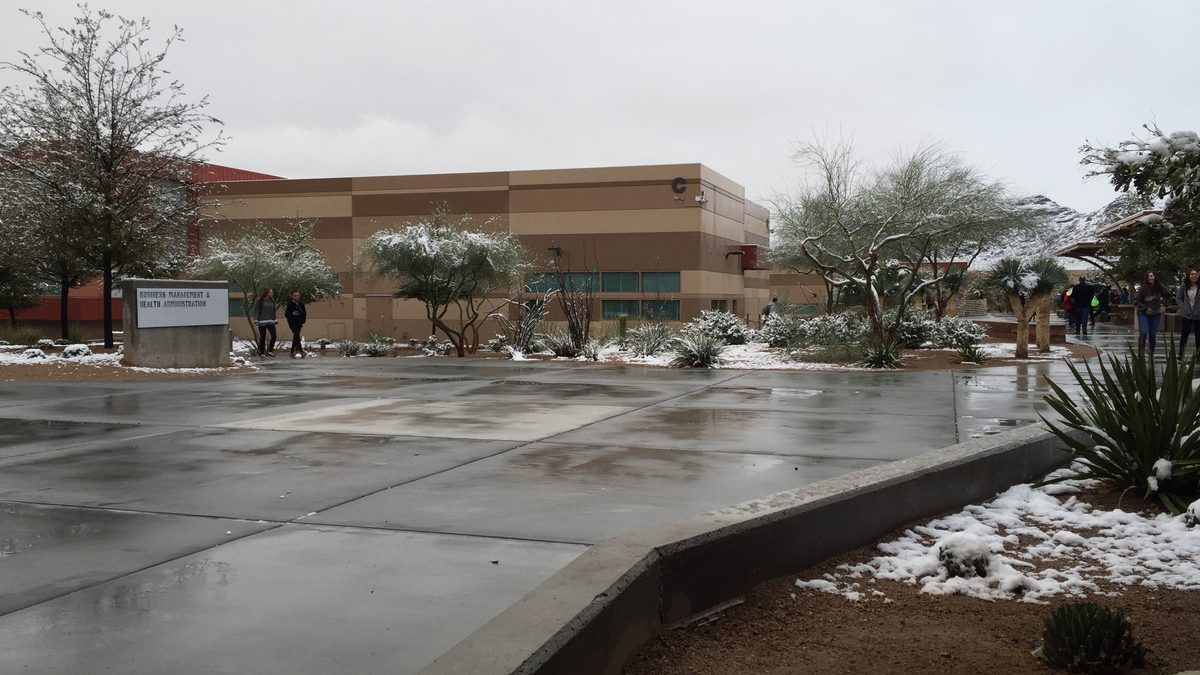
Occasionally, and when it does, the photos travel fast because of the contrast: palm trees and casino marquees collecting snow. February 2019 is the event most people mean when they ask this, the first time snow reached the valley floor in roughly a decade and made national news.
Here is the detail almost nobody checks: February 2019 does not appear in the National Weather Service's own top-ten list for snowiest months, snowiest seasons, or biggest single-day totals. That is not a contradiction. It means what fell was real enough to close roads and make headlines, and still too light to outrank a list where 1.3 inches holds the final spot. A street-level snow event and an officially "measurable" one are not always the same claim, and most coverage treats them as interchangeable.
The official record's own lowest-total column makes the opposite point just as clearly: 2020, the winter immediately after that viral moment, recorded 0.0 inches in every single month. One newsworthy winter does not make a trend, in either direction.
Where can you find real snow near Las Vegas?
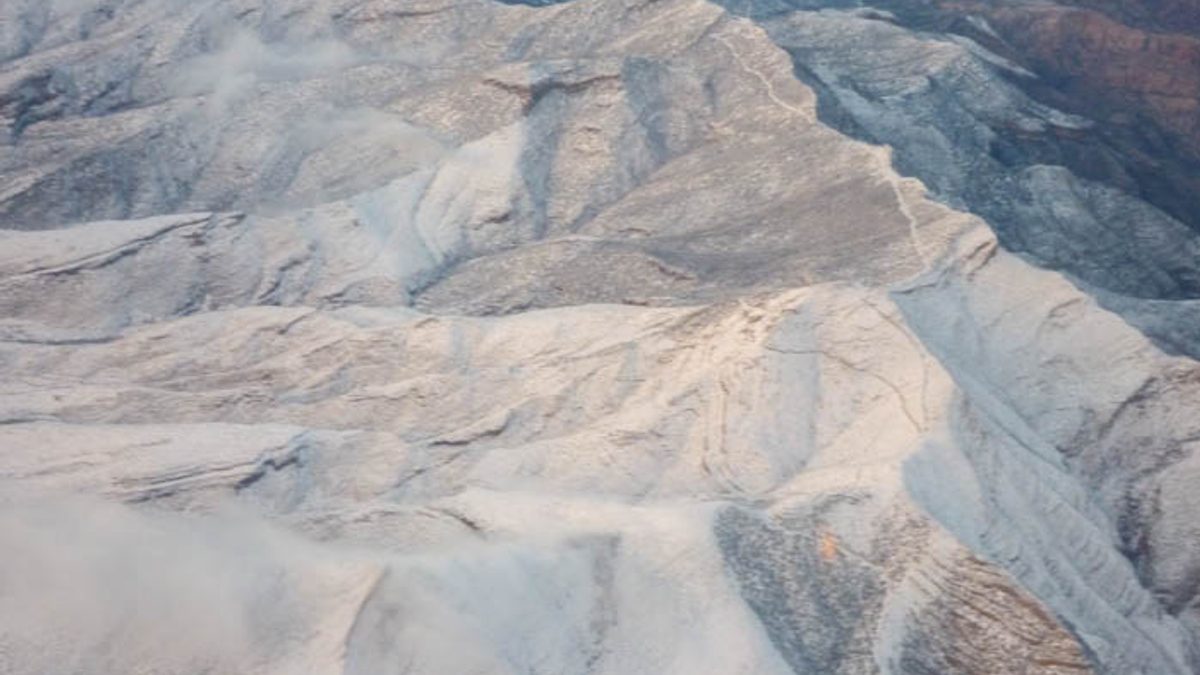
The Spring Mountains, 45 minutes to an hour northwest of the Strip, where Mount Charleston and the Lee Canyon ski area sit more than a mile above the valley floor. This is where the question actually has a satisfying answer: the valley gets a dusting once or twice a decade, the mountains get a real season most winters.
If seeing actual snow is the point of your trip, our stance is simple: do not build the plan around the Strip. Lee Canyon's own numbers explain why. Its base sits at 8,660 feet and its summit at 11,289 feet, more than a mile above the Strip's roughly 2,000-foot elevation, across 36 trails and 235 lift-served acres, averaging 129 inches of snow a year. The resort itself puts the drive at under an hour from the Strip. The elevation difference, not luck, is the entire reason one site gets snow most winters and the other gets it once or twice a decade.
That is also the honest downside for anyone timing a short Vegas trip around a hoped-for snow day downtown. The valley's whole history is three outlier winters in 88 years. A single multi-day visit is a weak bet against odds like that; the mountain forty-five minutes away is not.
What does this winter's El Niño outlook mean for Las Vegas?
NOAA's Climate Prediction Center put the odds of a strong-to-very-strong El Niño persisting through January-March 2027 above 83% in its October 8, 2026 ENSO discussion, with Nino-3.4 sea-surface temperatures already at +2.1°C. Its October 16 winter outlook leans the Southwest, including southern Nevada, wetter than average for December through February.
Read that outlook for what it is. It is a precipitation lean across three months, not a prediction for any single storm, and NOAA's own outlook does not forecast snowfall totals. What it does tell you: southern Nevada's temperature outlook for this winter carries equal chances of above, near or below average, rather than the warm lean most of the rest of the country has. More storm chances plus no guaranteed warmth is the same combination that has produced this valley's rare snow days before. It raises the odds of another one. It does not promise one, and we are not going to print a number that pretends otherwise.
What this record cannot tell you
Three real limits, stated plainly. One station cannot speak for an entire valley. Street-level news footage and the official gauge do not always agree. And nothing here is a forecast for this winter.
Advertisement
One gauge, one valley. The official record comes from a single station on Dean Martin Drive, about 200 feet higher than the old McCarran Airport site it replaced in 1996. Snowfall at the airport, on the Strip, or on the far side of the valley can differ from what that one gauge reports on any given day.
This is research, not experience. This guide is built from the National Weather Service's own published record and NOAA's current outlook. Nobody on this team has driven up to Lee Canyon this season, and we are not meteorologists. For a forecast on a specific day, the National Weather Service's Las Vegas office is the one to check.
Three winters are not a trend. 1949, 1974 and 1979 sit far enough above every other season that treating this record as a smooth, predictable curve would be dishonest. It is three outlier events and a long flat line, and nothing in the data says which kind the next outlier winter, whenever it comes, will be.
Common questions
How many times has it snowed on the Las Vegas Strip?
The official record only tracks the valley floor as a whole, not the Strip specifically, but the years residents and news coverage consistently point to are 1949, 1974, 1979, December 2008 and February 2019. Measurable snow at the official gauge is rare enough that most winters register a trace or nothing.
Is Mount Charleston part of Las Vegas?
No. It sits in Clark County within the Las Vegas metro area, but it is its own mountain community at a completely different elevation and climate. That elevation difference, over a mile higher than the Strip, is the entire reason the mountain gets real snow most winters and the valley almost never does.
When is the best time to see snow near Las Vegas?
Lee Canyon's lift-served season runs roughly December through March, snow and staffing permitting. Exact opening and closing dates shift year to year with snowpack, so check the resort's own current conditions page before driving up.
Has it ever snowed on Christmas in Las Vegas?
Not by the official measurable-snow record. December's single biggest day on record is 3.6 inches on December 17, 2008, five days before Christmas, not on it. The National Weather Service's earliest-snow and latest-snow records (November 15 and March 14) do not include a December 25 date.
Why does more snow fall in January than other winter months in Las Vegas?
Because the city's three biggest storms, January 1949, January 1974 and January 1979, all landed in that month, carrying the monthly record to 16.7 inches against a trace normal. Remove those three events and January looks almost identical to every other winter month on the list.
Does it ever snow in Las Vegas in October or April?
On record, only as a trace. The earliest measurable snow the city has ever recorded fell November 15, 1964 (3.0 inches), and the latest measurable snow fell March 3, 1976. Outside that six-month window, the official record shows nothing beyond an occasional trace.
Sources
- Monthly normals, monthly and seasonal records, daily extremes and consecutive-day records: National Weather Service Las Vegas, "Las Vegas Snow Records", pulled 28 October 2026. Station history (McCarran Airport through January 30, 1996; NWS Dean Martin Drive office since February 1, 1996) is stated directly in that document.
- Current ENSO status and strength forecast: NOAA Climate Prediction Center ENSO Diagnostic Discussion, issued 8 October 2026.
- Winter 2026-27 precipitation and temperature outlook: NOAA Climate Prediction Center U.S. Winter Outlook, released 16 October 2026.
- Lee Canyon base/summit elevation, trail count, acreage and average annual snowfall: Lee Canyon, "Mountain Statistics", pulled 28 October 2026.
- The 1909 storm's unofficial status: Las Vegas Sun, "Photos: Remembering snowstorms in Las Vegas" (2011), which attributes the figure to "unofficial weather records" rather than the NWS.
This page is part of the same winter cluster as our USA snow predictions hub and the Texas and Seattle pages, each pulled from the relevant city or state's own official record rather than a reworded almanac.
Topics
Advertisement