Colorado Snow This Week: 9 to 16 Inches on I-70, Another Storm Oct 21-22

NWS mapping shows 9-16 inches at the I-70 tunnels through Oct 16, 2026, with a second storm forecast Oct 21-22. Denver gets rain. Full breakdown.
Advertisement
Colorado snow in October 2026 comes in two very different flavors depending on where you're standing. Denver is sitting at 49 degrees under rain showers right now. Forty-five minutes up the hill, Rocky Mountain National Park is under an active snow advisory, and the National Weather Service's own mapping shows nine inches likely at the Eisenhower-Johnson Tunnels by Friday morning. That split is the whole story of this week: a multi-day storm is dropping snow across the state's highest terrain while the Front Range cities below it get rain and cooler air. If you're driving I-70 into the mountains this week, the weather at your front door is not the weather you're about to find.
Key facts (as 2026):
Storm window: Tuesday morning, 13 October, through Friday morning, 16 October 2026
I-70 at the Eisenhower-Johnson Tunnels: about 9 inches likely, up to 16 inches in the National Weather Service's high-end scenario
Statewide high country: 4 to 12 inches likely above 9,000 feet, with isolated peaks seeing 18 to 30 inches if the high-end scenario plays out
Five-day OpenSnow projections: Silverton around 17 inches, Wolf Creek 14 inches, Arapahoe Basin and Loveland around 12 inches, Keystone around 9 inches
Denver itself: rain, not snow, with highs in the upper 40s to low 50s this week
A second storm is already forecast for 21 to 22 October 2026, which could push some southwest Colorado totals to around 33 inches combined by 23 October
Ski season: Vail Resorts says Keystone will open "as soon as possible in October," with Breckenridge targeting 6 November and Vail Mountain 13 November
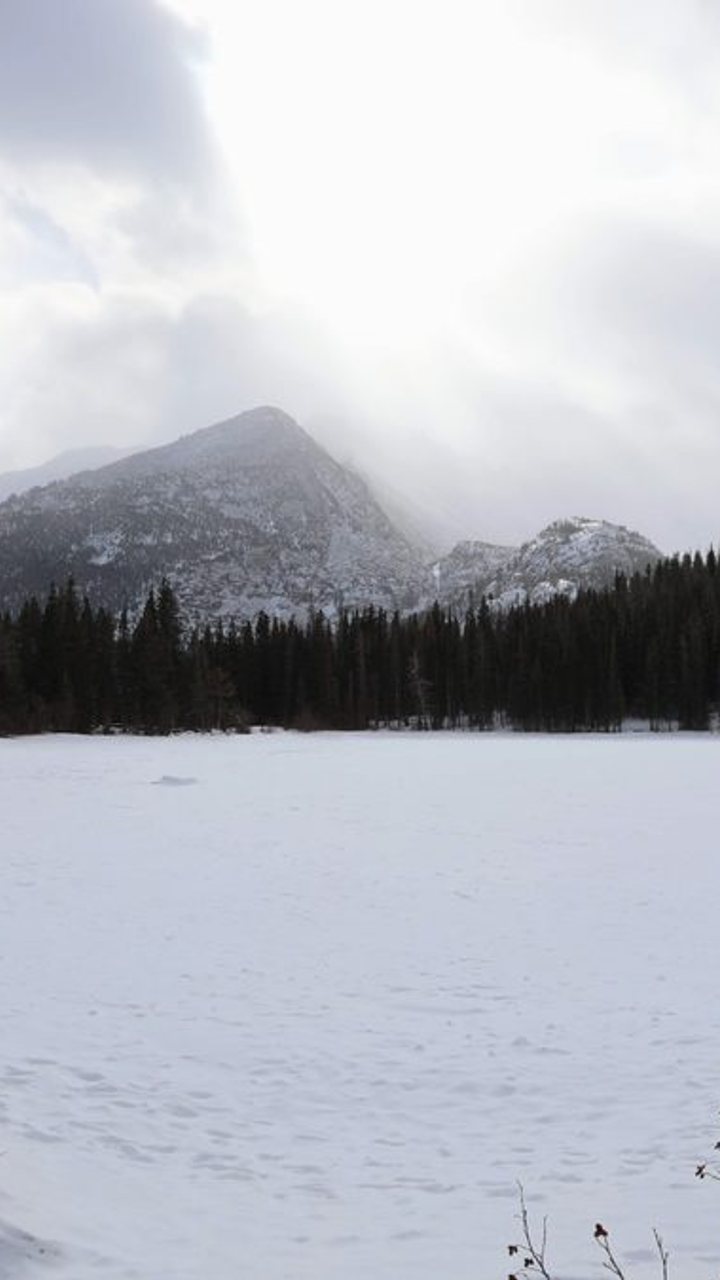
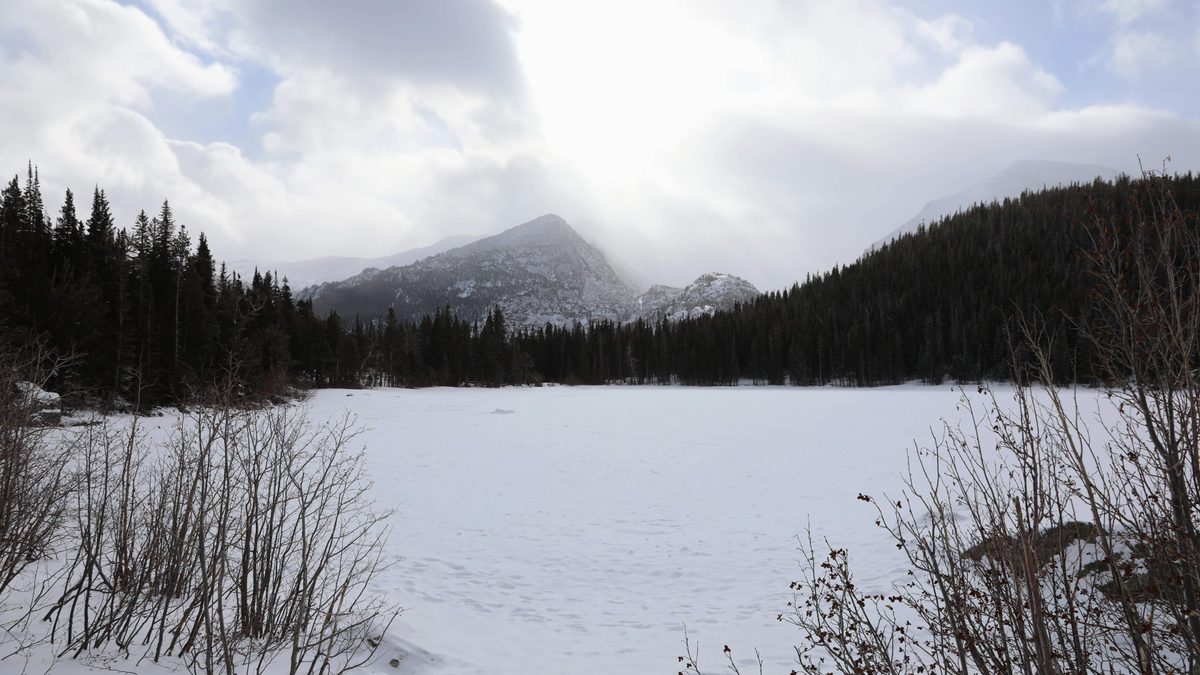
Bear Lake, Rocky Mountain National Park. Photo: Jonathan Wisner, CC BY 2.0.
Where is Colorado snow actually falling right now?
Above about 9,000 feet, mostly, and it's been going on since Tuesday. The National Weather Service has Winter Weather Advisories running across a wide band of Colorado's high country: Rocky Mountain National Park and the Medicine Bow Range, the mountains of Summit County, the Mosquito Range, the Indian Peaks, the eastern San Juan Mountains above 10,000 feet including Wolf Creek Pass, the Sawatch Range above 11,000 feet, and the Flat Tops and Elk Mountains near Grand Junction. OpenSnow's five-day numbers put Silverton around 17 inches and Wolf Creek at 14, with Arapahoe Basin, Loveland, and Keystone all in the 9 to 12 inch range through Thursday. Vail, lower and further north, is only looking at about an inch in the likely scenario.
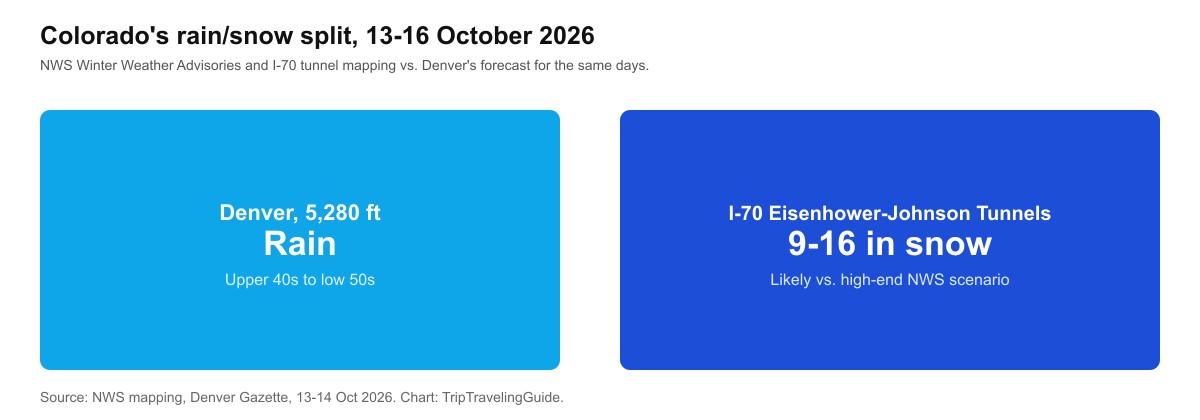
The rain/snow line sits right around 9,000 feet across Colorado this week.
Advertisement
Why is Denver getting rain instead of snow?
Elevation, mostly. Denver sits at 5,280 feet, and this system is cold enough to drop snow in the mountains but not quite cold enough to do the same on the plains, where temperatures are holding in the upper 40s to low 50s with rain. It's a pattern locals know well: the same storm can close a mountain pass and barely dampen a sidewalk in the same afternoon, and this week is a clean example of it.
How much snow is actually forecast for I-70 and the mountain passes?
The National Weather Service breaks it into two scenarios, and the gap between them is wide. At the Eisenhower-Johnson Tunnels, the most likely outcome through Friday morning is around 9 inches. The high-end, lower-probability scenario runs as high as 16 inches at the same spot. Statewide, that same split shows 4 to 12 inches likely above 9,000 feet, with the National Weather Service's higher-end mapping reaching 18 to 30 inches on some of the tallest peaks. Wolf Creek Pass, Rabbit Ears Pass, and the passes around Summit County are the ones worth checking before you leave, and conditions can shift between the likely and high-end numbers depending on exactly where the heaviest bands set up.
Is a second storm coming after this one?
Yes, and it could matter more than this week's storm for anyone planning a trip later in October. Forecast models point to another system arriving 21 to 22 October 2026, with totals building through 23 October. In parts of southwest Colorado, the two storms combined could add up to roughly 33 inches. Central and northern Colorado mountains are looking at something closer to 14 to 15 inches from that second system. Those numbers come from longer-range model data, not a confirmed National Weather Service advisory yet, so treat them as a reason to keep checking rather than a locked-in total.
Are Colorado's mountain passes safe to drive this week?
Treat them with caution, not panic. The advisories call for slippery and snow-covered roads rather than closures, and the heaviest snow is concentrated above 9,000 to 11,000 feet. Check the Colorado Department of Transportation's COtrip site for live chain-law status and closures, since advisories can be extended or upgraded, and the gap between the likely and high-end snow scenarios above is exactly the kind of thing that changes a pass from slushy to genuinely hazardous with little warning.
Has this helped any Colorado ski resorts get closer to opening?
It's helping, and it's already visible. Some Colorado mountains and resorts were reporting their first natural snowfall of the year as this storm moved in. On the official side, Vail Resorts says Keystone, which usually opens first among its properties, will start "as soon as possible in October," while Breckenridge is targeting 6 November and Vail Mountain 13 November. Arapahoe Basin, which isn't a Vail Resorts property and sets its own schedule, is sitting at around 12 inches of new snow in OpenSnow's five-day projection, which is a solid start on a natural base even before an official date is announced. See our full ski season opening dates guide for every resort we're tracking across North America.
Advertisement
Is this connected to the storm that hit Montana, Utah, and Wyoming?
It's part of the same stretch of unusually active early-season weather across the Rockies, though not necessarily one single named storm all the way through. Our Montana, Utah, and Wyoming guides all cover storms moving through the same general corridor between 8 and 14 October 2026. Colorado's storm this week picks up right where that window leaves off, which fits a broader pattern more than it confirms one continuous system end to end.
What are the limits of this guide?
Every total above splits into a likely scenario and a less probable high-end scenario for a reason: mountain snow forecasts routinely land somewhere between the two, and Winter Weather Advisories get extended, shortened, or upgraded as conditions change. The second storm forecast for 21 to 22 October is longer-range model output, not an issued advisory, and carries more uncertainty than this week's numbers. This is also a short-term storm update, separate from the full-season outlook in our Colorado snow predictions 2026-2027 guide. Check the National Weather Service Boulder, Pueblo, or Grand Junction offices directly for the latest version of any advisory before you drive.
Quick answers about Colorado snow, October 2026
Is it snowing in Colorado right now?
Yes, above roughly 9,000 feet, since Tuesday, 13 October 2026. Denver and the lower Front Range are getting rain instead.
How much snow is I-70 getting?
About 9 inches is the likely scenario at the Eisenhower-Johnson Tunnels through Friday morning, with up to 16 inches possible in the National Weather Service's high-end scenario.
Is there another storm coming?
Yes. Longer-range forecasts point to a second system around 21 to 22 October, with southwest Colorado potentially seeing around 33 inches combined with this week's storm by 23 October.
Are I-70 mountain passes closed?
Not as of this advisory. Expect slippery, snow-covered roads rather than closures, and check COtrip for live updates.
Has any Colorado ski resort opened yet?
Not officially as of 14 October 2026, though natural snow is already falling at several resorts. Vail Resorts says Keystone will open as soon as possible in October.
Sources
Topics
Advertisement